

Dedicated to Developing Responsible Herbal Practice
Established in 2002 by Susan Wynn, DVM, CVA, CVCH, AHG

AMERICAN GINSENG
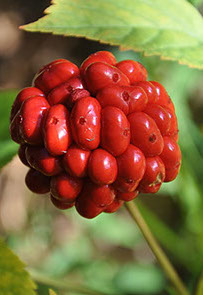
Panax quinquefolium, Wikipedia
COMMON NAME: Am. Ginseng
LATIN NAME: Panax quinquefolium
AKA: Five Fingers, Tartar Root, Red Berry, Man's Health
Common Name: American Ginseng, Panax quinquefolium, Five Fingers, Tartar Root, Red Berry, Man's Health
Family: Araliaceae
Part Used: Root
Active constituents: Triterpenoid saponin glycosides, ginsenosides, (Quinquenosides I,II,II, IV and V are ginsenosides unique to this species. P. quincefolium also contains ginsenosides found in P.ginseng) and panaxoside 5-7%; essential oils 3%; resin; mucilage, starch, Unique high molecular weight polysaccharides known as glycans (quinquefolans A, B, C),, 18 amino acids, trace mineral, copper, zinc, selenium, iodine, manganese; polyacetylenes, sesquiterpenes, sterols, flavonoids; The bitter taste comes from the sesquiterpene content.
Actions: Bitter tonic, rejuvenative, adaptogen, mild stimulant, and of the central nervous system; bitter tonic, immune amphoteric; mild demulcent; adaptogen, nerve tonic; Chinese Actions: 1. Spleen Qi deficiency; Liver Yin Deficiency: increases digestive Qi, promotes absorption and relieves fatigue, restores the endocrine and nervous systems, replenishes deficiency and enhances immunity; 2. Lung Qi deficiency; Lung Yin deficiency and clears deficiency heat; 3. Heart Blood and Spleen deficiency, nerve and brain deficiency
Indications: Brain exhaustion from overwork; dry red tongue with often yellow coat and tooth decay;; Weakness and debility from chronic illness or stress, cough, “nervous stomach” with lack of saliva, loss of appetite, malabsorption, adrenal cortex deficiency, estrogen deficiency relaxing tonic that also improves mental function. Diabetes. Gravel with weakness; ligamentous looseness, adaptogen from radiation treatments; yin deficient geriatric tonic, improves cognitive function, absent-mindedness, unrest, depression, cerebral anemia.
Cautions: Endangered herb use only cultivated sustainable sources; never use wild American Ginseng
Contraindications: Forbidden in intestines damp cold with indigestion and in high fever; incompatible with Li Lu, Radix et Rhizoma Veratri
Herb Drug Interactions: At very high doses it can alter the effects of warfarin.
Dosage (use animal doses where available, otherwise human doses can be included here but specify): Human: Powdered root: 0.25 – 2 gm daily; Tincture:0.25 – 2 ml TID; Tea (1/2 tsp powdered root boiled in 1 cup water): ¼-1 cup TID; Matt Wood uses 3-5 drops 1-3 times a day Small animal: dried herb: 25-300 mg/kg, divided daily; Decoction and infusion: 2.5-10 g per cup, ¼-1/2 cup per 10 kg, divided daily
Notes: American Ginseng is native to deep forests in Eastern North America. It is sweet, nourishing and moistening whereas Asian ginseng is more strongly warming and moistening
Tissue State: atrophy
Energetics: Sweet, slightly bitter, neutral and cooling, moist
Meridians Affected: spleen, lungs heart
Native American use: Cherokee: analgesic for headache, anticonvulsive, expectorant, used for colic; weakness of the womb and nervous affections; for oral thrush; Creek: also used poultice for bleeding cuts; diaphoretic and febrifuge; short-windedness; used for cures where all others have failed; antiemetic, and vomiting from cholera morbus, vomiting gall; rheumatism; ear drops for ear ache; topical for sore eyes; seedpods during a difficult labor; smoked for asthma; used for gonorrhea; used in hunting bundles; strengthener of mental powers; Meskwaki: also used as an adjuvant to render other remedies more powerful, love medicine; considered the universal remedy for children and adults; Micmac also used as an detergent for the blood, reproductive aid; Semimole also used to ward off baby’s fearful dreams about raccoons or opossums.
Matt Wood: It is the ideal Yin tonic or moistener and rejuvenative for dry mucosa. It works slowly. By increasing lubrication it is cooling, but deeper down in the endocrine system it has an activation effect, which is warming. It is the most soft and feminine plant in the woods. Specific Indications: nervous exhaustion, following loss of fluids, dry, atrophic debilitated habits, exhaustion of the brain or nervous system from overwork, children that are too nervous to play lack of saliva, loss of appetite, weak stomach, dry, red tongue, sometimes with yellow coating and tooth decay; gravel with weakness, ligamentous looseness, easily injured, slow to heal, pain in bones, with weakness, worse from exposure to cold; arthritis, travel fatigue
Holmes: It acts as a yin tonic, moistening and rejuvenating dry mucosa while it deeply stimulates the endocrine system by warming it. Hence, it is one of the herbs that can expel a deeply retained pathogen in the Tai yin level.
William Bryd said of American Ginseng "Its virtues are, that it gives an uncommon Warmth and Vigour to the blood, and frisks the Spirits beyond any other Cordial" He used it "as a help to bear Fatigue, I us'd to chew a root of Ginseng as I Walk't along."
The early eclectic herbalists used American Ginseng mostly for exhausted digestive systems and mental exhaustion from overwork.
Samuel Henry (1814) wrote that, “ This root is good in gravel and all debilitated habits, creates a good appetite invigorates the system and is an excellent restorative to those fatigued by travelling; in all weaknesses from excess in venery." It helps treat bone pain from cold, and gravelly complaints; bone pain from syphilis, hence strongly indicated as a recovery from Lyme and vaccine induced diseases.
Jacob Bigelow used it for moistening and nourishing the mucosa of the respiratory tract, in tedious chronic coughs, incident to people in years.
Fyfe: It has been employed in nervous dyspepsia with marked advantage. It is a true nerve tonic, and exerts a quieting influence. It aids the stomach in performing its functional action, and not only increases the muscular power of the stomach, but it stimulates the gastric glands. It is especially adapted to cases in which the brain and nervous system have been overworked. The effects of ginseng are not promptly manifested, as it is slow in its action. It is a nerve tonic and stimulant; Indications-gastric derangements of nervous origin, nervous debility; loss of appetite; exhaustion of the brain or nervous system from overwork.
Scudder: It is feebly tonic, a pleasant stomachic and aromatic stimulant, a gentle nervine, slightly diaphoretic and somewhat demulcent; if promotes the appetite, facilitates digestion and invigorates the general system, and is considered beneficial in morbid states of the nervous system. It can be used as a nervine and antispasmodic, either alone or associated with other agents belonging to that class, in cases of debility or irritability of the nervous system. Scudder used it for lack of saliva and noted that it must be used for weeks to obtain good results.
Ellington: improves capillary circulation of the brain and used in cerebral anemia.
Wynn and Fougere: This herb is similar to P.ginseng, but is considered milder and safer for use in younger patients.
Holmes: It is outstanding in its ability to tonify Lung Yin, which is unlike Asian ginseng which is put under the Qi and Yang tonics. It is the best cookie-jar tonics for the Earth/Melancholic and Lung types. With its adaptogenic effect that tones brain and endocrine centers, it enhances long-term immunity and reduces the ravages of stress. Possessing a restoring/regulating influence on digestive and metabolic function it is one of the best Qi tonics known. Its sweet, bitter qualities fully substantiate this. It is similar to acupuncture points; CV 6, 12; St 36; Bl 24, 38.
Historical note: Daniel Boone made his fortune trading American Ginseng; George Washington relied on the money made from Ginseng sales to fund the war effort. Although the root is traditionally used; David Winston’s uncle would put a bit of a Ginseng leaf in all of his herbal formulas, he said it made everything work better.
Published research: prevents colds, improves exercise performance, antioxidant activity show, reduces prolactin levels; may regulate GABAergic neurotransmission; has hypoglycemic activity; its safety is noteworthy for long term treatment; has potential chemopreventive effects and may prove to be a therapeutic agent against hepatocarcinogenesis; attenuates intermittent-high-glucose-induced oxidative stress injury; causes regeneration of β-cells resulting in enhanced insulin secretion; protect the myocardium by attenuating oxidative stress and ERS induced by myocardial infarction, highlighting the ERS pathways as potential therapeutic targets for AMI. (Acute myocardial infarction; ); improves cancer related fatigue; potent antitumor activity; beneficial supplement during chemotherapy for enhancing the antitumor efficacy and reducing the toxicity of the chemotherapy; prevents the diabetes-induced retinal and cardiac biochemical and functional changes probably through inhibition of oxidative stress; potent inhibitory effect of ginseng against leptin-induced cardiac hypertrophy; reduced the growth of 3T3-L1 cells, down-regulated the accumulation of lipid and up-regulated the expression of adiponectin in the 3T3-L1 adipocyte cell model.; is critical in achieving life span augmentation in these leukemic infant/juvenile mice; can be used as an effective adjuvant agent for the clinical management of colorectal cancers; significant improvement of working memory (WM) performance associated with P. quinquefolius. Corsi block performance was improved by all doses at all testing times; exert anti-cancer effects; Clinical study of supportive therapy with radiation.
In Traditional Chinese Medicine
Xi Yang Shen, Panax quinquefolium
Properties: bitter, sweet, moist
Channels: Kidney, Heart, Lung
Actions:
1. Tonify Qi and nourish Yin; Lung and Kidney Yin Deficiency
2. Clears Fire and Generates Body Fluids;
3. Sedates Heat in the Intestines and Stops Bleeding
Chen: Xi Yang Shen is cool in nature and is stronger in nourishing the yin and sedating fire, while its qi-tonic action is weaker than that of Ren Shen. As such, Xi Yang Shen is best used for patients with both qi and yin deficiencies as is often seen in Lung yin deficient fire. Ren Shen is warm and stronger in tonifying qi and is used for patients experiencing deficiency and cold. Ren Shen is especially effective for severe conditions where there is exhaustion of qi, in which case the patients often show Spleen and Stomach deficiencies, Lung qi deficiency, qi and blood deficiencies or possible Qi collapse.