

Dedicated to Developing Responsible Herbal Practice
Established in 2002 by Susan Wynn, DVM, CVA, CVCH, AHG

ANGELICA
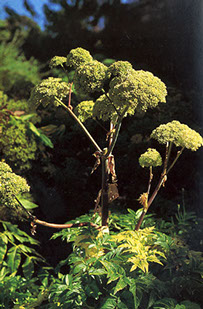
Angelica archangelica, Bff, Wikipedia
COMMON NAME: Angelica
LATIN NAME: Angelica archangelica
AKA: Garden Angelica, Holy Ghost, Wild Celery
Angelica* archangelica* L., Angelica; Other name-Garden angelica, wood angelica, archangel, European angelica. Family Apiaceae (Umbelliferae) Part used is the root and rhizome, Peter Holmes also uses the fruit and leaves for essential oils. There are a lot of volatile oils in Angelica; also flavanoids, sugars, and phytosterols. Grows along rivers in Baltic region and Scandinavia, Brings air into the watery realm; Naturalized in America; NA species *Angelica atropurpurea-*reports of toxicity in fresh root.
Western Actions: Aromatic, diaphoretic, bitter tonic, antispasmodic, choleretic, cholagogue, carminative, emmonagogue, antimicrobial, diuretic, sedative.
Chinese action:
1. Clear Wind Cold, Damp;
2. Clear Lung Phlegm Cold, tonify Heart Qi;
3. Warm and tonify Spleen, tonify blood and Qi, transform Damp and Phlegm;
4. Warm and move Intestines Qi; Treat St cold, Intestinal Damp
5. Warm and move Heart Qi (Similar to Chinese Dang Gui but has less blood
moving properties)
6. Genitourinary Damp Cold
Indications include:
Abdominal fullness, gas, mild cramps, nausea, used for borborygmus, flatulence, colic, chronic enteritis and colitis; cough, chronic bronchial asthma, cold and flu onset, sinusitis, retained placenta, cystitis
Traditional use: non-ulcer dyspepsia, nausea, heartburn, anorexia; gas, menstrual cramps, colds, fever, headache, URI, mouth inflammation.
Cautions and Contraindications: As it is a uterine stimulant, not to be used during Pregnancy. Being an herb of medium strength, give breaks of dosages if given for any long period of time. If the essential oil is used externally, exposure to UV light should be avoided. Raises blood glucose, caution if diabetic
Pregnancy: lactation (but no adverse effects have been reported), Bleeding disorders; Contraindicated for gastric and duodenal ulcers but no clinical reports on adverse effects can be found.
Drug interactions: None known: Potential, theoretical interaction with anticoagulants and photosensitizing drug
Dose:
*Small animal:*
*Dried herb*: 25-500 mg/kg, divided daily (best TID)
*Infusion*: 5-30 gram per cup of water, administered ¼-1/2 cup per 10 kg divided daily (TID);
* Tincture*: 1:2-1:3 0.5-2.5 ml per 10 kg divided daily (TID)
Dosage of Angelica Dang Gui: Horse and Cattle 15-60 gram; Camels: 35-75 g;llamas, Alpacas, Goats, Sheep, Pigs: 5-15 g daily dose
Cold water maceration of the root is as effective as the tincture.
Preparation: The roots are hard to dry and easily turn rancid. They should be cut lengthwise, rapidly dried in a heated stove, crushed, and stored airtight. Boiling the root produces an aromatic bitter, steeping produces an anesthetic and astringent for the stomach lining, and alcohol improves the relaxing, antispasmodic properties. The seeds easily lose their properties; freezing preserves them and promotes germinatio
Notes: Grows in damp and waste areas. Temperature: warm; Organ: Lu, Sp, St, In, Ht; Tastes: Aromatic, bitter, acrid, slightly sweet, salty; stimulating and diffusive
Tissue states: treats atrophy and depression (Matt Wood)
CULPEPER
For epidemics, protects against infection; resists poison by comforting the heart, blood and spirits; for all lung disorders, including pleurisy, cough, and shortness of breath, for a cold stomach, helps digestion, for overeating, colic; for obstructions of the liver and spleen; promotes menstruation, expel the afterbirth; promotes urination, for difficult urination; for purulent ulcers; cleans them and heals them quickly by generating flesh.
TABERNAEMONTANUS
Warms head and brain to prevent apoplexy in cold, old people, breaks and removes congealed blood, from internal injuries, strengthens the heart if it is weak due to cold.
COOK
The roots are grayish-brown outwardly and nearly white within. They have a peculiar aromatic and pungent odour, and a pungent taste. They may be chewed or used in warm infusion; and prove diffusively stimulating and relaxing to the stomach and skin, with a slight influence upon the kidneys. They promptly relieve flatulence and wind colic Are not proper in inflamed conditions. The seeds possess the same properties abut are rather more diaphoretic. A warm decoction of them, used freely during an evening, is a popular family remedy for retained placenta, and suppression of the menes suddenly following cold; and is deserving of use if employed early. A strong decoction has been asserted to cure chills, if suitable cathartics have first been used. and the tincture for spasmodic coughs. They can be used profitably as an adjunct to antispasmodic nervines.
WEISS
*Rudolf Weiss*-Angelic is an excellent remedy for an undernourished “asthenic”. It warms and stimulates the digestion. The bitters and sugars get the appetite and secretions going, while the spicy compounds stimulate circulation to the stomach and periphery. The oil stimulate the “fat of the kidneys”, the adrenal cortex, releasing the cortisol, which supports digestion and raises blood sugar. The circulation of the blood is opened to the periphery to bring nutrition to all parts of the body, to stimulate fluid movement in the possibly dried out joints, to rebuild fatty deposits insulating the nerves, and to improve circulation to the hands, feet, and uterus. *Kenner-*Through its action on the blood, it assists the liver, improving circulation through the portal vein and the hepatic artery, bringing more food/toxins for metabolism and protecting the hepatic cells against injury. Also through stimulation of the circulation, angelica acts on the brain, head, joints, and extremities. Thus used for syncope, vertigo, nervousness, and fatigue.
WOOD
Specific Indications-thin, dry, pallid persons with poor digestion, gas bloating, but tendencies to accumulation of fluids; poor peripheral circulation, cold, purple hands and feet.; mental dullness, exhaustion, and obtuseness; lack of appetite, anorexia nervosa, gastritis, stomach pain, colic