

Dedicated to Developing Responsible Herbal Practice
Established in 2002 by Susan Wynn, DVM, CVA, CVCH, AHG

ASHWAGANDA
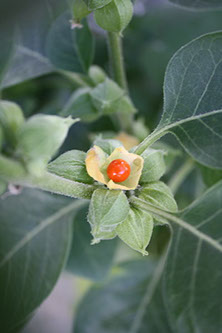
Withania somnifera, Wowbobwow12
COMMON NAME: Ashwaganda
LATIN NAME: Withania somnifera
AKA: Indian ginseng, winter cherry, poison gooseberry
Common Name: Ashwagandha root, Withania somnifera, winter cherry, Indian ginseng, poison gooseberry
Family: Solanaceae
Part Used: Root, leaf, and whole plant
Active constituents: Steroidal lactones, alkaloids, and flavonoids, amino acids and iron.
Actions: Tonic, adaptogen, nervine, sedative, antitumor in high doses, anti-inflammatory, and anodyne, hematopoietic. Ayurvedic properties: Rasa: Bitter (tikta), pungent (katu); Guna: Light (lagju) and unctuous (snigdha); Veerya: Hot (ushna); Vipaka: sweet (madhur). Dosha: balances kapha and vata
Indications: Has been used traditionally for cough, dropsy, rheumatism, scabies and sores. The roots increase milk production in ruminants. Chronic debility, malnourishment, senile debility, arthritic conditions, nervous exhaustion, fatigue, senile dementia, muscular weakness, insomnia, general nerve tonic, skin disease, aspergillosis, stress, osteoarthritis, cognitive dysfunction; adjunct to chemotherapy or long-term steroid; anemia, convalescence, hypothyroid disease, and hypertension, emaciation, chronic disease especially if inflammatory in nature; possible cancer preventative.
Cautions: pregnancy
Contraindications: Not for use during pregnancy; large doses could be abortifacient properties
Herb Drug Interactions: Caution is advised with sedatives or anxiolytics. Can potentiate barbiturates.
Dosage (use animal doses where available, otherwise human doses can be included here but specify): Human: Dried herb: 1-10 g TID; Infusion: 5-30 gr simmered in cow milk for 15-30 min. TID; Tincture: 1:2-1:3- 2-5 ml TID; Narayana oil: 3-10 drops internal or external
Notes: Indigenous to India, other Asian countries and parts of Africa; found widely on waste areas. Fresh fruits are used as an antiasthmatic, sedative and emetic, the fried fruits as a carminative, depurative and in dyspepsia. The leaves are used as a febrifuge and tonic.
Energetics: warm, pungent, sweet
Published research: sarcoma regression; anti-inflammatory for a variety of musculoskeletal conditions; non-specific increased resistance during stress; mild depressant effect; GABA-mimetic activity; cognition-enhancing and memory improving effects; reduces cyclophosphamide-induced urotoxicity and leukopenia as well as gamma radiation-induced leukopenia; increases serum T3 and T4; decrease arterial and diastolic blood pressure
David Winston: Traditional Ayurvedic medicinal plant; considered to be the best tonic in India. It is a calming adaptogen and nervine used to reduce stress, stimulate libido and male reproductive functioning. It also acts as an antispasmodic and along with Black Cohosh, Kava and Wood Betony is specific for fibromyalgia pain. Due to its rich iron content, Withania is used to treat iron deficient anemia and the resultant fatigue associated with it.