

Dedicated to Developing Responsible Herbal Practice
Established in 2002 by Susan Wynn, DVM, CVA, CVCH, AHG

BAI SHAO
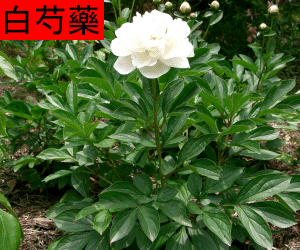
Radix Paeoniae Alba, Bristol Botanicals
COMMON NAME: Bai Shao
LATIN NAME: Radix Paeoniae Alba
AKA: Paeony, White Peony
Common Name: Bai Shao, Radix Paeoniae Alba, Bai Shao (Mandarin), Paeony, White Peony
Family: Ranunculaceae
Part used: root
Active constituents: paeoniflorin (monoterpene glycoside) , benzoylpaeoniflorin , albiflorin , oxypaeoniflorin , pentagalloylglucose , paeonilactones A, B and C, polysaccharides; triterpenoids
Actions: Platelet aggregate inhibition, anticoagulation and fibrinolysis activity , antiallergic, anticonvulsant, anti-inflammatory, antispasmodic, bitter, cognition enhancer, neuroprotective, immune enhancing, skeletal muscle relaxant, renoprotective, analgesic
TCM Actions: 1. Nourish Blood and preserves Yin; Liver Blood deficiency; obstetric/gynecological disorders; weak constitution, with spontaneous or night sweating; Liver wind rising with yin and blood deficiencies; 2. Nourishes the Liver to Calm Liver Yang and Liver Wind; 3. Softens the liver and relieves pain; pain and spasms; breast distention, pre-menstrual syndrome; diarrhea, borborygmus with abdominal pain; dysenteric disorders with rectal tenesmus
Indications: Liver Blood Deficiency: brittle nails, tinnitus; gynecological disorders; spontaneous sweating; muscle spasms; Rheumatoid arthritis, systemic lupus erythematosus, hepatitis, dysmenorrhea, muscle cramping and spasms, Bi Zheng, tightness of tendons; and fever. Thrombosis, cognitive decline, epilepsy, smooth muscle spasm, dizziness, diarrhea, borborygmus; dysenteric disorders with rectal tenesmus; muscle cramping, allergies.
Contraindications & Herb Drug interactions: synergizes with licorice for muscle contractions; Antagonizes Dendrobium, and Mirabilitum and counteracts Amyda and Cirsium; Bai Shao is incompatible with Li Lu, Veratrum, contraindicated in cases of middle jiao yang deficiency with cold; in patients with eczema or rashes from exterior wind attack with incomplete expression; in postpartum patients with blood stagnation or for those who are still bleeding; Use has been associated with drowsiness and sedation. Can reduce diarrhoea due to cisplatin in animals. Theoretically antibiotics could decreasing peony's efficacy.
Dose (Human and Veterinary): Human: dried herb 2-6g/day dried root 4-12mL/day of 1:2 fluid extract; Horses and Cattle: 15-60 g; Camels: 30-100 g; Llamas, alpacas, goats, sheep, and pigs: 6-15 g.; dogs: 1-3 g: Cats: 0.5-1 g; Rabbits: 0.5-1.5 g; Birds: 0.2-2 g
Notes:
The peony is a flowering plant in the genus Paeonia; they are native to Asia, Southern Europe and Western North America. Boundaries between species are not clear and estimates of the number of species range from 25 to 40. Most are herbaceous perennial plants0.5–1.5 meters (1.6–4.9 ft) tall, but some resemble trees 1.5–3 meters (4.9–9.8 ft) tall. They have compound, deeply lobed leaves and large, often fragrant, flowers, ranging from red to white or yellow, in late spring and early summer
Energetics: Slightly cold, sour, bitter
Meridians: Liver, Spleen
Chen and Chen:
Bai Shao, cool in thermal property, nourishes the blood and yin and is best for blood-deficient patients with heat signs; chronic deficiency of Liver Blood results in deficiencies of the Ren and Chong channels. The symptoms may include: irregular menstruation, dysmenorrhea, uterine bleeding; and gestational and postpartum disorders. Bai Shao nourishes blood, softens the liver and is an important herb to regulate menstruation and alleviate pain. It is best for patients with blood deficient heat or Liver Yang rising with underlying yin or blood deficiencies. Night sweating is indicative of yin deficiency and spontaneous sweating is suggestive of qi deficiency. Night sweating by definition is perspiration that takes place during sleep but stops upon awakening. Night sweating does not necessarily have to happen during the night but any perspiration during sleep would qualify as night sweating, which occurs as yang retreats to the interior during sleep and pushes out body fluids. Spontaneous sweating occurs while one is awake, regardless of day or night, with or without exertion, as it is the result of weakness of the wei qi with inability to control the opining and closing of the pores. Bai Shao may be used to stop both night and spontaneous sweating by nourishing the ying level and preserving yin. Liver yin and blood deficiencies often occur when there has been long standing retention of pathogenic heat from a warm-febrile disease or are caused by a misuse of heat-clearing, purgative or diaphoretic herbs; Bai Shao nourishes blood, preserves yin and softens the Liver. It is cool in nature, which helps to disperse heat. The Liver governs the sinews; excess accumulation of heat in the body injures the fluids and deprives the tendons and sinews of nourishment. Bai Shao is often used for pain in the muscles, tendons and sinews caused by lack of nourishment. Bai Shao softens the liver and also relieves epigastric, intercostal, hypochondriac and abdominal pain, and spasms and cramps of the smooth muscles and tendons. The fresh or unprocessed herb has a stronger function to preserve yin and calm the Liver, and is commonly used to treat headaches, dizziness, tinnitus, and other conditions in which Liver Yang is rising. The dry-fried form is warmer, and more effective to tonify Blood and preserve Yin. Fried-fried Bai Shao is best for abdominal pain, diarrhea, and borborygmus. Frying Bai Shao with grain-based liquor converts its cool property to neutral and improves its blood-invigorating effect. And is best for spasms, cramps, hypochondriac and abdominal pain from Qi and Blood stagnation. Bai Shao is often combined with Gui Zhi to relieve exterior to relieve exterior conditions in deficient patients; harmonizes the ying and the wei levels to promote diaphoresis and at the same time prevent leakage of sweat and nourish fluids. Bai Shao and Wu Yao are an excellent pair to treat the lower abdominal bloating and pain associated with dysmenorrhea.
Xie:
Bai Shao comes from the inner part of the root; Paeonia Chi Shao comes from the outer part of the root and is used for Blood invigoration
The peony is named after Paeon (also spelled Paean), a student of Asclepius, the Greek god of medicine and healing. Asclepius became jealous of his pupil; Zeus saved Paeon from the wrath of Asclepius by turning him into the peony flower.
The European peony, Paeonia officinalis; Cook: root is possessed of mildly relaxing properties of the antispasmodic order. An infusion made of an ounce of the roots to a pint of warm water may be given freely in the spasms and colics of children, and will frequently remove flatus. Formerly a fabulous reputation was connected with it for the treatment of epilepsy, chorea, and other convulsions.
Matt Wood feels there is little difference between White Peony and its Chinese cousin.
Research:
sedative and suppressant effect on the CNS; prolonged sleeping time induced by barbiturates; protective effect against seizures induced by cardiazol; inhibitory influence on the smooth muscles of the intestines and uterus; inhibitory action against Bacillus dysenteriae; E. coli; Salmonella typhi; Pseudomonas aeruginosa; Staph. aureus; Beta-hemolytic Strep., Diplococcus pneumoniae, and some dermatophytes; antipyretic and anti-inflammatory effects; inhibits emboli formation through delayed aggregation of platelets; relaxes blood vessels, dilate peripheral blood vessels, and cause a slight decrease in blood pressure. Positive clinical studies include intestinal spasm, pain, trigeminal neuralgia, muscle spasms and facial twitching, myotonia, constipation, peptic ulcer, hyperosteogeny; whooping cough; asthma; restless leg syndrome; diabetes mellitus