
Dedicated to Developing Responsible Herbal Practice
Established in 2002 by Susan Wynn, DVM, CVA, CVCH, AHG

BALMONY
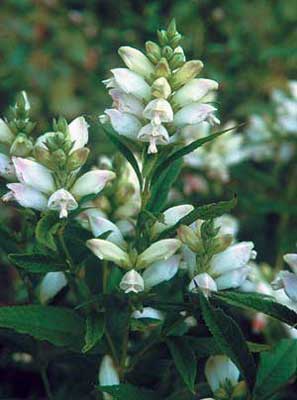
Chelone glabra, www.nps.gov
COMMON NAME: Balmony
LATIN NAME: Chelone glabra
AKA: Turtle head, Turtlebloom, Snakehead
Common Name: Chelone glabra, Balmony, Turtle head, Turtlebloom, Snakehead
Family: Scrophulariaceae
Part Used: The herb
Active constituents: Glycoside, saponins
Actions: Tonic, Anthelmintic, dermatological aid; dietary aid; febrifuge; laxative; hepatic; choleretics, cholagogues; TCM indications: 1. Clears Liver and spleen damp heat; Liver fire; Shao Yang remittent fever; 2. Liver and stomach Qi stagnation; 3. promotes tissue repair
Indications: Vomiting, with painful and swollen sides; bilious headache, constipation, cholecystitis, duodenitis; remittent fever-malaria; Splenic and hepatic enlargement; liver and portal congestion; epigastric fullness and pain; heartburn; greyish stools; pancreatitis; gastro-intestinal debility, torpidity of the bowels; atonic state of the digestive organs; chronic diseases attended with debility; jaundice, with loss of appetite; debility of the nervous system from excessive use of quinine. Topically: external ointment for mastitis, haemorrhoids and painful ulcers
Cautions: Pregnancy
Contraindications: Pregnancy
Herb Drug Interactions: None found
Dosage (use animal doses where available, otherwise human doses can be included here but specify): Human: Specific Medicine dose: 5-60 drops; An infusion made of a drachm of the powdered leaves to half a pint of hot water; give ½-1 ounce three times a day; Dried powder: five to ten grains; tid
Notes: It likes rich soils, and in both moist and dry situations, by the edges of woods and sides of fences
Energetics: bitter, a bit astringent, cold, neutral; stimulating, decongesting, dissolving, softening, diluting
Meridian affinities: Liver, Gallbladder, stomach, spleen, pancreas
Native American use:
infusion of roots and cedar bark used as a medicinal tea; infusion of blooms taken for worms; used for sores or skin eruptions; to increase appetite; infusion of blooms taken for fevers; as a laxative; taken for too much gall; infusion of smashed roots taken as an anti-witchcraft medicine; used to prevent pregnancy; young shoots and leaves boiled and fried as a food.
Dadd: To restore to health in thin Hide-bound horses; 3 ounces of sassafras bark, sulphur and salt with 2 ounces bloodroot and balmony, Chelone glabra.
Felter: A useful remedy for gastro-intestinal debility with hepatic topor or jaundice. Dyspeptic conditions attending convalescence from prostrating fevers are often aided by it. It should be studied particularly for vague and shifting pain in the region of the ascending colon, attended with persistent uneasiness and sometimes tormina. The infusion in small doses is effective.
Cook: The leaves are a strong and permanent bitter with about equal degrees of relaxing and stimulating properties. They expend the greater portion of their influence on the stomach; but also exert a decided action on the gallducts; and a more moderate one on the whole alvine canal. Few tonics are equal to balmony in cases of enfeebled stomach, with accompanying indigestion, biliousness, costiveness, and general languor. It arouses the gastric and salivary secretions, and decidedly improves digestion; also favors the biliary and fecal discharges, and leaves the whole assimilative organism tones. In a similar manner, it is a good adjunct in the treatment of jaundice; and in affections of the skin dependent upon hepatic and alvine inaction, it is a valuable addition to alterative. It is one of the most suitable tonics in cachectic states, strumous difficulties, dropsies and recoveries from prostrating maladies, where a laxative tonic is needed with the other remedies. It has been classed among the vermifuges; but is useful then chiefly to give the tone that should accompany and follow anthelmintics. It is nearly always grateful to the stomach; but is better calculated for languid and atonic conditions that for any form of gastric sensitiveness.
Fyfe: In hepatic disorders Chelone has long been deemed a curative agent. It is said to stimulate the secretive power of the liver, and at the same time give tone and regularity of action
Holmes: virtually identical to Fringe Tree root back, expect not used to treat diabetes.
Plants for a future: Antibilious; Aperient; Appetizer; Cathartic; Cholagogue; Detergent; Tonic; Vermifuge.
Balmony is a very bitter herb with a tea-like flavour that acts mainly as a tonic for the liver and digestive system It has long been held in esteem in N. American folk medicine, though it has never been investigated scientifically. The herb also has anti-depressant and laxative effects. A decoction of the whole herb is antibilious, aperient, appetizer, cathartic, cholagogue, detergent, tonic, vermifuge. It is used internally in the treatment of consumption, debility, diseases of the liver, gallbladder problems, gallstones etc. It is also used to relieve nausea and vomiting, intestinal colic and to expel worms. Its tonic effect upon the digestive system has made it of benefit in the treatment of anorexia nervosa. Externally, it is applied as a soothing ointment to piles, inflamed tumours, irritable ulcers, inflamed breasts etc. The plant is harvested when in flower and is dried for later use.