

Dedicated to Developing Responsible Herbal Practice
Established in 2002 by Susan Wynn, DVM, CVA, CVCH, AHG

BANEBERRY
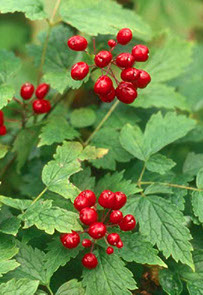
Actea rubra
COMMON NAME: Baneberry
LATIN NAME: Actea rubra
AKA: Actea arguta, Actea spicata, also spelled Actaea
Common Name: Actea rubra, Baneberry, also called Actea arguta, Actea spicata, also spelled Actaea
Family: Ranunculaceae
Part Used: Roots: gather roots after the berries are matured or in unflowered stands in August or September.; root is stable for several years
Active constituents: 20% resins: cimicifugin, cimigenol, and actea-type glycosides; it does not contain the estrogen-mimicking compounds found in Black Cohosh.
Actions: Anti-inflammatory, peripheral vasodilator, antispasmodic, meningeal vasorelaxant; sedative; Chinese Actions: Regulate Muscle channels, clear Wind and Heat in Muscle channels; Calm Liver Yang, tonify Kidney Qi Clear Wind Heat and clear Heat Toxins; raising Yang
Indications: Internal use: Spasms, back pain, spinal injury. Convulsions, rheumatism, rheumatoid arthritis, myalgia, muscular spasms, neuralgia, neck stiffness, lumbago, sciatica; headache with influenza, eye strain, tics, tremors, common cold, influenza, External: swollen, painful sprains and contusions; locally analgesic.
Cautions: Not to use during pregnancy; avoid in relaxed conditions of the mucus membranes or a tendency to coldness
Contraindications: Berries are toxic
Herb Drug Interactions: None found
Dosage (use animal doses where available, otherwise human doses can be included here but specify): Human: Tincture dry root 1:5: 10-20 drops tid: External liniment: macerate 2ounces of ground root with 1 ounce of powdered Tobacco and a scant tablespoon of African Cayenne in a pint of 70% rubbing alcohol
Notes: Close relative is Black Cohosh; it can be found in moist, biodiverse woodlands, from California and Alaska to the Atlantic Coast. It likes shade, moist and rich dirt, and can grow down to the water in shaded streams. Although Baneberry does not need old-growth forest as much as Black Cohosh, it is still most abundant in clean places.
Taste: Sweet. Slightly acrid
Tissue Conditions: Increases bronchial secretions; a stimulating diffusive acting upon the liver and kidneys; It acts upon unstriped muscles; trusted for muscle aches from over strain; relaxant to serous membranes in acute and chronic inflammatory distubances; relaxes sympathetic ganglia; it leaves behind a gently toned impression upon the mucous and serous tissues.
Native American use:
decoction of root for colds, cough, improve appetite; Blackfoot tribe used to treat horses; roots used for sores, infusion of root to increase milk flow; taken after childbirth to ‘clear up the system’; decoction of root for arthritis; bronchial or lung trouble; used as a blood medicine; decoction of roots taken for emaciation; topically applied to boils and wounds; decoction of root taken for syphilis; taken and sprinkled on the head to give ’young men the right sense; infusion of roots given to dogs ‘ when the dog won’t hunt anymore’, slow heavy menstrual flow, stomach troubles
Michael Moore: (only modern source of information); Although, I had long considered Baneberry to be somewhat toxic, I have changed my mind in recent years. The constituents in the root are nearly the same as in Black Cohosh, although the resins seem a little stronger on a weight basis, hence the lower recommended dose. The berries are apparently quite toxic and have given this plant a bad reputation. Internally the root has the same uses as listed under Black Cohosh, with the exception of estrogenic.