
Dedicated to Developing Responsible Herbal Practice
Established in 2002 by Susan Wynn, DVM, CVA, CVCH, AHG

BIRCH
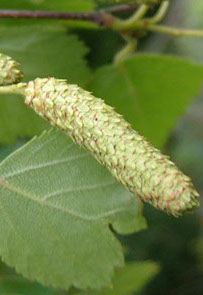
Betula pubescens, www.aphotoflora.com
COMMON NAME: Birch
LATIN NAME: Betula pubescens
AKA: N/A
Common Name: Birch, Betula pubescens
Family: Betulaceae
Part Used: Bark-strong decoction; leaves, and buds; sap can also be used; sap oil has been used in acne, eczema, herpes, pruritis, psoriasis
Add 1.2 tsp of bicarbonate of soda to the leaf infusion to enhance its effects.
Active constituents: Essential oils, flavonoids, avicularins, betulina, methyl salicylate, glucuronly-3 myricetol, quercetin, alpha-betulenol; beta-betulenol; betulinic acid, betulol; monotropitoside; saponins, resin, volatile oil
Actions: Diuretic: leaves; analgesic: bark; diaphoretic, nutrient; astringent, demulcent, allays inflammation, antimicrobial, cardiac stimulant, anticholesterolaemic, mild laxative, Urinary antiseptic, antirheumatic, dermatological agent, vulnerary; intermittent fever, nervine relaxant; TCM actions: 1. general fluids dyscrasia with damp/cold/heat obstruction; skin damp cold/heat; promotes detoxification, clears damp cold, dissolves deposits and relieves eczema and pain; 2. Kidney Qi stagnation; gallbladder and stomach Qi stagnation; 3. Bladder damp heat; ;intestines damp heat; 4. External wind heat; 5. promotes hair growth
Indications: Fresh leaves: Wheezy and irritated bronchial mucosa; lung grunge; renal and cardiac edema; renal calculi urinary calculi, albuminuria, dysuria, gout, renal colic, urinary tract soother, urinary tract infections; helps in slow recovery from childbirth; prolonged menses in weakened and winter-tired women; Bark: analgesic for headache and arthritis, arthritic pain arthritis; eczema, wounds; fevers in Tai Yang and Shao Yang/Yin stages; Topical-tincture of the bark-liniment; hair rinse to stimulant growth; Buds as Gemmotherapy: infections in ears, eyes, nose, throat; sexual fatigue/impotence; chronic fatigue, universal drainer, adrenal glad, testosterone precursor, allergies, depression.
Cautions: none
Contraindications: none
Herb Drug Interactions: Theoretical synergistic effect with other salicylates
Dosage (use animal doses where available, otherwise human doses can be included here but specify): Human: Bark- decoction, 1-2 ounces to 4 times a day; external wash; leaves-standard infusion, 8 ounces a day or as bath or wash as needed; (Holmes) Infusion: 8-14 g. tincture: 2-5 ml Buds: small animals: 5 drops twice a day
Notes: Stream sides and moist places. Two species of Birch are endangered; Betula papyrifera and B. pumila var. glanulifera
Energetics: sweet, bitter, astringent
Tissue State: atrophy; Betula supports the elimination of uric acid and calculi; a prompt diuretic to relieve edema of cardiac and renal origin; infected urinary tract
Meridian affinities: Kidney, Liver, Uterus
Tissue State: atrophy, constriction
Native American use:
reports using many species; Yellow Birch: cathartic, emetic, removes bile for intestines; blood purifier; Italian Itch; internal blood disease; seasonal; Sweet Birch: dysentery, colds, aid the stomach; milky urine; diarrhea; pulmonary troubles; when blood gets bad and cold; fever; gonorrhea when pregnant; soreness; when a person tires; highly valued medicine because it sustains the deer, the mainstay of life; Bog Birch: stomachache and intestinal discomfort; Betula nigra: so high will be 3 miles to get more.
Specific indications (from Matt Wood): insomnia, as a topical for hair; dry thin: poor scalp health, dry dandruff or oily dandruff; dry irritable winter coughs; colds (buds); bleeding gums; canker sores, stomach ulcers; indigestion (birch charcoal), diarrhea; boiled buds used for the bitter resins or fresh buds to treat gallbladder stagnation; cardiac edema; kidney stones; bladder infection; postpartum slow recovery; tight muscles, joints, strains, stiff knees; arthritis, rheumatism; intermittent fever, arteriosclerosis; corns, calluses acne, boils, abscesses (bark external)
Michael Moore: The tender leaves are picked in the spring, before the bitterness is highly developed, juiced and used as a blood cleanser in Germany or infused in a tea. In Russia the fresh buds are preserved in vodka for subsequent use. The diuretic effect is enhanced by adding a fraction of sodium bicarbonate or drinking cold. The diaphoretic effect is enhanced by drinking hot. The leaves produce diuresis best in small, frequent doses.
Tis Mal Crow: The oil of the leaves is used as a liniment. The oily inner bark is used in North American Indian Medicine for the skin.
Matthew Wood: In Germany, it is traditional to use the tea of the leaves or the spring sap of the birch to remove proteinaceous and mineral waste from the blood, muscles, and joints. The tea of the leaves is a nonirritating diuretic that removes these waste products without inflaming the kidneys. It can even be safely used when there is nephrosis and chronic nephritis-birch contains saponins that are diuretic and have a cortisone-like effect. It is used to dissolve earthen deposits like kidney stones and gouty and arthritic deposits. It opens the sweat glands, which assists the kidneys to remove waste, and the bark is used as an emollient externally and internally to remove hard, indurated, mineralized skin. As a diaphoretic birch leaf can be useful in intermittent fever. It has a long history of use as a hair tonic. Birch bark is used in anthroposophical medicine for hard, indurated mineralized skin. A warm or hot tea is a highly effective method for stimulating the surface and opening the pores. It is suited to the treatment of problems of aging associated with drying, hardening, and sclerosis.
Donald Law: In the northern lands it is held efficacious against evil spirits and witchcraft.
Ellingwood: One of the old writers, Dragenforff, says the bark is given in malarial fevers, in dropsy, gout, disease of the lungs; also in abscesses, and in skin diseases and itch, and where there is excessive sweating of the feet. The juice or sap from the tree is used in kidney and bladder trouble. The bark of the black variety is recommended for its diuretic effect and for its influence in dissolving kidney stones. Infusion of the leaves is recommended for albuminuria and for nephrolithiasis.
Massner: Gemmotherapy use: infections in ears, eyes, nose, throat; sexual fatigue/impotence; chronic fatigue, universal drainer, adrenal glad, testosterone precursor, allergies, depression.
Holmes: Cherry birch, Sweet or Mahogany birch was be used interchangeable with Silver birch leaf and bark. The oil is commercially often added to, or sold under the name of Wintergreen of to which it resembles. It is effective in dealing with most types of conditions caused by an imbalance of The Fluid organism. These disorders include chronic forms of edema, fluids dyscrasia and simple catabolic stasis with general toxicosis. It has analgesic, anti-inflammatory, antipyretic, diuretic and choleretic components of one kind or another in the leaf, bud, and bark. In Nordic countries, the Birch is an emblem of a legendary princess, while in Mediterranean countries it belongs to her aspect of Aphrodite. Thriving in Yin quality cool, moist environments and served by airiness and spaciousness, Birch radiates light. We may describe this light energy as a bioenergectic light process. On the physical level, these light bioenergies leave their marks in the form of the compound know was salicylic acid. Its light-filled salicylic acid helps explain its use for painful inflammations (joints), fevers, infection (intestinal and urinary), and biliary congestion. On the other hand, Birch’s saponins, potassium and minerals ensure a gentle diuretic detoxicant and resolvent action in chronic conditions involving the fluid environment. Hard, fatty deposits are dissolved and uric acid is eliminated. Gout is the strongest indication of all.
Culpeper: It is a tree of Venus. The juice of the leaves, while they are young, or the distilled water of them, or the water that comes from the tree being bored with an ague, and distilled afterwards; any of these being drank for some days together, is available to break the stone in the kidneys and bladder, and is good also the wash sore mouths.
Cook: ( Sweet Birch, Black Birch, and Mahogany Birch) The bark is mild nervine relaxant and stimulant; promoting gentle action on the skin, if given in warm infusion; leaving behind a slightly tonic and astringent impression on the stomach and bowels. It is most serviceable in diarrhea, cholera infantum, and similar complaints of the bowels; in which it promotes perspiration, quiets the stomach, and relieves nausea, and promotes just that mild tonicity which is allowable in such case. It may be used as a grateful adjunct to other articles, in chronic diarrhea and dysentery; and may also be given by warm infusion in convalescence from measles and typhus, when the bowels are inclined to be too loose. It has an extremely mild astringent influence, which follows the expenditure of its other powers, and is more toning than drying. The leaves are less astringent and tonic than the bark, but promote the flow of urine, and are excellent to relieve irritability of the kidneys and bladder; their action on the skin is at the same time favorable both in these cases and in the same cases where the bark is used. They have great power to assuage renal and cystic irritation and especially when such irritation is connected with too much mucous discharge, as in oxalic acid gavel, sub-acute catarrh of the bladder, etc.