

Dedicated to Developing Responsible Herbal Practice
Established in 2002 by Susan Wynn, DVM, CVA, CVCH, AHG

BLACK HOREHOUND
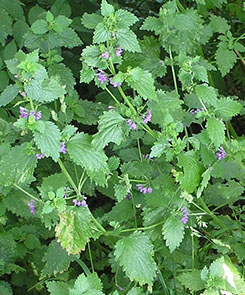
Ballota nigra, Michael Becker
COMMON NAME: Black Horehound
LATIN NAME: Ballota nigra
AKA: N/A
Common Name: Black Horehound, Ballota nigra
Family: Lamiaceae
Part Used: Dried flowering tops
Active constituents: Volatile oils, flavonoids, phenylpropanoids, and bitter diterpenes.
Actions: Nervous sedative, relaxant, spasmolytic; anti-emetic; tranquilizer; anti-inflammatory; and antioxidant; antimicrobial; TCM 1)calm Rebellious St Qi-travel sickness or nausea from inner Ear disorders, and 2)calm Heart Shen disturbances-anxiety, nervous tension. It has also a stimulant expectorant and antitussive action, and it can treat bronchial conditions from Lung phlegm heat with stagnate lung qi
Indications: Motion sickness, nausea and or vomiting association with nervous tension, inner ear disorders, pregnancy; loss of appetite, bilious colic, parasites, gravel; anxiety, nervous tension, sleep disturbances
Cautions: Deficiency cold conditions
Contraindications: None found
Herb Drug Interactions: None reported
Dosage (use animal doses where available, otherwise human doses can be included here but specify): Human: infusion 4-8 gram’ Tincture: 1-3 m
Notes: mint native to Europe, naturalized elsewhere. Similar to White Horehound but has a dark green leaf instead of a light one. Intensely bitter and rankly aromatic. Black Horehound is calms the spirit and circulates the Qi. Treats floating Yang disorders presenting agitation, insomnia and anxiety and constrained Qi conditions with ringing eats and irritability.
Energetics: bitters and pungent, cool and dry
Tissue states: stagnation and depression
Organs: St, Ht, (Lu)
While both white and black horehound are used to treat spasmodic coughs, Black Horehound is used more as a tranquilizer and anti-emetic while White Horehound is used as an expectorant for non-productive coughs, and as a bitter tonic for digestion." According to Jeremy Ross, Dioscorides used a poultice of Black Horehound with salt to treat bites from rabid dogs.
Richard Hool:
In Black Horehound, we have one of the most efficacious remedies that we can use for the cure of biliousness, bilious colic and sour belching. The relief it affords is both prompt and certain, for if only a leaf or a piece of the stem be chewed, and the juice swallowed, it will be found to act as a current of electricity had passed into the stomach, allaying all the symptoms momentarily. In coughs, bronchitis, and asthma, it is exceedingly useful. In chronic coughs, accompanied by spitting of blood, it will be found most excellent, either alone or combined with other reliable remedies, such as lobelia, marshmallow. Its action is most reliable, as it resolves the viscidity of the mucus secretions and acts as an alterative-tonic upon the mucous follicles deterges and heals the diseased membrane and corrects the acrimony of the discharges. In all cases of consumption it will be found a most useful remedy, as it not only corrects the acrimony of the mucus discharges but soothes the irritations of the nerves caused by the fit of coughing, thereby making it easier for the patient in nervous affections.”
David Hoffmann:
“is an excellent remedy for calming nausea and vomiting when the cause lies within the nervous system, rather that in the stomach.” MOTION SICKNESS
Matthew Wood:
Specific Indications: Panic attacks, nervous debility; irritable coughs, viscid and acrid mucus, bloody expectorations; loss of appetite, nervous debility, general weakness, sour belching, biliousness, bilious colic, intestinal parasites, tachycardia, dropsy; gout, motions sickness
French Traditional use:
symptoms of neurotonic disorders especially for minor sleeplessness, and for symptomatic treatment of cough.
Recent research:
Successfully used as a repellent for mosquitoes and houseflies; strong anti-microbial action and exhibited a dose-dependent response in the production of δ-hemolysin, indicating anti-QS activity in a pathogenic MRSA isolate; an Essential oil obtained from the roots was effective for the antimicrobial activity against seven bacterial species and one fungi; B. nigra possess hypoglycemic effects in rats and therefore, can be useful for the treatment of diabetes mellitus.; traditional use in Italy classifies it as a trophic protective; Results concerning antioxidant investigations evidence an ability to scavenge reactive oxygen species. Moreover, the use of different stimuli having various pathways of action on PMN oxidative metabolism permits to establish that each phenylpropanoid ester has its own particular way of action by using proteine kinase C or phospholipase C pathways; its phenylpropanoid glycosides are strong inhibitors of Cu(2+)-induced LDL oxidation, independent of any capacity to act as Cu(2+) chelators.