

Dedicated to Developing Responsible Herbal Practice
Established in 2002 by Susan Wynn, DVM, CVA, CVCH, AHG

BREADFRUIT
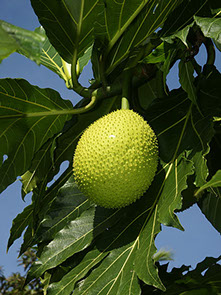
Artocarpus communis, Hans Hillewaert
COMMON NAME: Breadfruit
LATIN NAME: Artocarpus communis
AKA: Ulu
Common Name: Breadfruit, Artocarpus communis, ‘Ulu
Family: Moraceae (Mullberry)
Part Used: All parts; flowers, leafs, sap, fruit, bark, root
Active constituents: Alpha amyrin, artocarpin, flavonoids, folic acid, hydrocyanic acid, lectin, linoleic acid, linolenic acid, oleic acid, papayotin, pectins, starch, Vitamin C.
Actions: Anodyne, antibacterial, antitumor, aperient, astringent, contraceptive, haemolytic, laxative, masticatory, purgative, styptic, vermifuge
Indications: Cardio-vascular-high blood pressure, chest pain and vomiting from heart problems; Derm-boils, abscesses, skin infection, sap topical; cracked skin; burns and rashes; Digestive: stomach pain, diarrhea, vomiting blood, fish poisoning; Endocrine-diabetes; headache, toothache; thrush, tonsillitis; puncture wounds in the eye, topical juice for ear infections; topically ashes of the leaves for infections; liver disease; spleen enlargements; topical for back pain and rheumatism; post partum infections-weakness and retained placentas, internal juice from stem bark or roots; Asthma yellow leaf decocted, coug and difficult or painful breathing, root juice or young fruit juice; use an infused bard for urinary problem, blood or decreased urination. Leaves and uncooked fruit are used as a food for animals, and used to fatten pigs, also been used to heal fractured bones. Wide use as a food; “unlimited”
Cautions: Some species have a purgative effect if eaten raw
Contraindications: None found
Herb Drug Interactions: None reported
Dosage (use animal doses where available, otherwise human doses can be included here but specify): Wide as the plant can be used as a food source
Notes: Its range is global near the equator. Probably native to Java, Gather when the fruit begins to weep in June, July and August