 |
| Veterinary Botanical
Medicine Association |
| Dedicated to Developing
Responsible Herbal Practice |
| |
| MEMBER WEBSITE |
| |
|
Jasmine C. Lyon,
Executive Director |
|
QUESTIONS?
email
office@vbma.org |
| |
| Established in 2002 by
Susan Wynn, DVM, RH(AHG) |
|
|
|
| |
|
|
| |
|
VBMA Herbal Wiki |
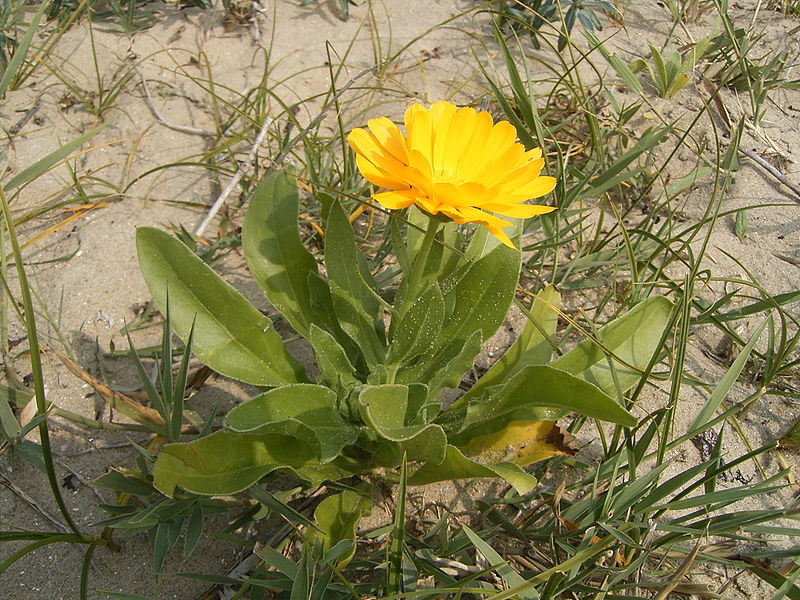 |
| COMMON NAME:
Calendula |
| LATIN NAME:
Calendula officinalis |
| AKA:
Pot marigold, ruddles, English marigold,
Garden marigold |
| |
|
BACK TO
HERBAL WIKI INDEX |
|
| Calendula
officinalis |
|
|
|
Common Name: Calendula
Latin Name:
Calendula officinalis, AKA L., Garden marigold; Pot
Marigold, Jin Zhan Ju
Family:
Asteraceae (Compositae)
Part Used:
Petals of the flowerhead
Native to Egypt-worldwide now |
| |
| Active constituents:
Flavonoids, isorhamnetic and quercetin, rutin;
triterpene saponins based on oleanolic acid; essential
oils, sesquiterpenes and triterpenes; immunostimulant
polysaccharides |
| |
| Actions:
Anti-inflammatory, antiviral, antibacterial;*
vulnerary*; anti-septic, lymphatic, reduces blood
lipids, astringent, spasmolytic, cholagogue, alterative,
adhesive to Mucus membranes, hypoglycemic, anti-oxidant;
cicatrisant, capillary stimulant TCM actions: Clear St
and Intestine Heat; Clear Retained pathogen and Heat
toxin; heat qi deficiency; Clears external wind heat;
Uterus/Liver Qi stagnation, uterine and venous blood
stagnation |
| |
| Indications:
Topical: Burns, cuts, and bruises; mouthwash for gums,
mucous membranes, and throat; stomach ulcers; eyewash;
infections of gastrointestinal tract, skin, and GU
tract; inflamed skin; eczema, pruitus; swollen glands,
lymphadenitis; elevated cholesterol and triglycerides;
wound dressing; udder salve for mastitis; gingivitis;
cardiac deficiency; flu and eruptive fevers; retained
placenta, uterine subinvolution; uterine cysts and
tumors; liver congestion |
| |
| Cautions:
Avoid if sensitive to daisy or aster family; Store away
from light and moisture; shelf life is three years; do
not dry using artificial warmth. |
| |
| Contraindications:
No adverse effects in pregnancy or breastfeeding; one
text worried about pregnancy, but seems unsubstantiated
but it is a slight uterine stimulant. |
| |
| Herb Drug Interactions:
Theoretical-interact with sedative and antihypertensive
drugs. No reports of adverse effects. |
| |
Dosage
(use animal doses where available, otherwise human doses
can be included here but specify):
*Human: Infusion*: 1 tsp (5-10g) dried florets in 8 oz.
water; steep 10-15 minute; drink 2-3 cups per day;
*Fluid Extract*: 1:1 in 40 % alcohol): 0.5-1.0, TID;
*Tincture*: 1:5: 5-10 drops (1-2 ml) TID; *Ointment:*
2-5% calendula; apply 3-4 times per day as needed.
*Small animal: Dried herb*: 25-400 mg/kg. Divided daily;
Infusion: 5-30 g per cup of water ¼-1/2 cup per 10 kg
divided daily; tincture: 1:2-1:3: 0.5-2. ml per 10 kg
divided TID |
| |
Notes:
Energetics: neutral with cooling, dry;
(;Culpeper-warm in the first degree possibly second
(diaphoretic) ; bitter, pungent, salty, astringent
Meridians: Liver, Heart, Lung, Chong and Ren
Treats: depressed tissues It has been used topically on
plants as a molluskicidal.
Traditional uses: amenorrhea, angina, fever, gastritis,
hypotension, jaundice, rheumatism, and vomiting |
| |
| Gerard:
strengthens the heart, protects the heart from fevers
and toxins, treats the trembling of the heart; clears
redness, pain and inflammation from the eyes; promotes
menstruation, helps expel the placenta |
| |
| Culpeper: They
strengthen the heart exceedingly and are very
expulsive..(expel any malignant quality which may annoy
them) |
| |
| Cook: mild and
diffusive stimulant with some relaxing properties,
expending their power chiefly on the nerves and
moderately upon capillary circulation; useful in
hysteria; promotes moisture to the surface; beneficial
to the uterus; also the gall-ducts. |
| |
| Fyfe: used as
a vaginal douche for leucorrhea; Indicated with
enfeebled condition of the capillary blood vessels;
varicose veins |
| |
| Wood:
Calendula improves internal drainage from purulent
wounds, an affinity to the lymphatic system and the
veins. Seven properties: 1. external to
wounds-antiseptic, bacteriostatic, and hemostatic; 2.
internally for swollen glands and lingering, unresolved
infections, cleansing the lymphatic glands and ducts, 3.
lowers high enzyme counts from damaged lover, 4. soothes
digestive mucosa, 5. warms the stomach, drives heat to
the periphery, thins fluids, and causes sweating in
fever, 6. promotes menstruation, and 7. prevent sickness
in winter. Specific indications: Tongue is slight
puffy, pink or red papillae down the sides of the
tongue, indicating unresolved lymphatic inflammation. |
| |
Published research:
Studies have shown: Significant anti-oxidant effect;
potent analgesic properties; accelerates the rate of
contraction and epithelialization of excision wounds;
hypoglycemic effects, inhibitory activity of gastric
emptying and gastro-protective effects; antiulcer.
Recent studies illustrated that Calendula extract gel is
effective on decreasing the intensity of radiotherapy;
it possesses anti-cytokine activity and can treat
carotid atherosclerosis; and great anti-oxidation
effect; highly selective antitumor effect especially to
melanomas with antiangiogenic activity; antileukemic
properties; excellent antifungal activity; successfully
treat ulcerative colitis; inhibits HGF-mediated collagen
degradation, promise for rheumatoid conditions; topical
vagina treatment; protective effect against subacute
cigarette smoke-induced cell injury; cardioprotection
ability; a therapy for cheilitis exfoliative; inhibit;
inhibit growth of Campylobacter. Jejuni; a
hepatoprotectant; a feed supplement for pigs to act as a
protectant from oxidative DNA damage and lipid
peroxidation induced by high polyunsaturated fatty acid
(PUFA) intake; insecticidal activity; and a ear
treatment. |
| |
| |
|
|