|
|
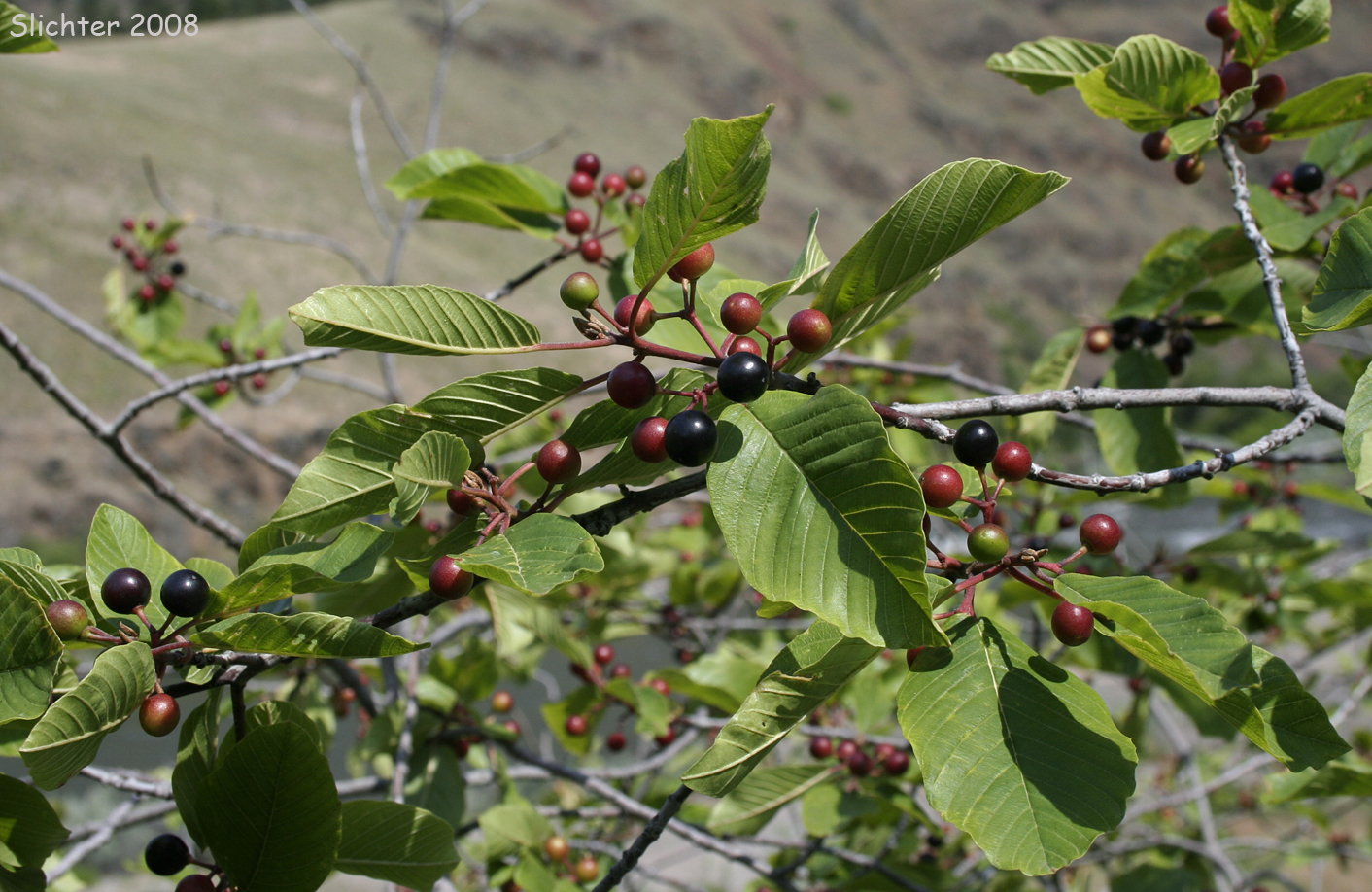
Common Name-Cascara
|
Rhamnus purshiana;
Cascara sagrada,
Frangula purshiana
(DC) Cascara; also American Buckthorn, cascara
buckthorn, sacred bark, bitter bark, California
buckthorn, chittem bark, purshiana bark,
persiana bark, yellow bark, bearberry,
amerikanisch faulbaum, sacree
|
|
Family
|
Rhamnaceae
|
|
Part Used
|
Bark; berries used by
Native Americans- bark gathered in spring; dried
1-6 years
|
|
Active constituents
|
Anthraquinone and
anthrone glucosides; Cascarosides A-F; aloe-emodin,
baraloin, frangulin, chrysalin, palmidin A-C;
free aglycones
|
|
Actions
|
Laxative to purgative (dose dependent),
alterative, hepatic, stomachic, febrifuge,
nervine, antibilious, antidiabetic, peristaltic
Chinese Actions: Treat
Intestine dry heat, Liver fire- promotes bowel
movement, removes accumulations and clears heat,
2.tonify and moves gallbladder and St. Qi
stagnation; Liver Qi stagnation, 3. treats
Kidney Qi stagnation, promotes urination, and
resolves toxicosis.
|
|
Indications
|
Constipation; acute with
fever, thirst or chronic with accumulation of
toxins; painful conditions where softer stool is
needed; gastrointestinal conditions with hepatic
involvement; headache resulting from
constipation or intestinal weakness; dyspepsia,
stimulating gastric secretion, loss of appetite,
asthenia, postprandial bloating, coated tongue,
itching of skin; accumulations of toxins with
rheumatism, gout associated with constipation or
digestive and heptobiliary weakness
|
|
Cautions
|
Long term use possible
increase in colorectal cancer-use 1-2 weeks only
, use of stimulating laxatives can lead to
intestinal sluggishness; use preparations made
for bark that has been dried over 1 year
|
|
Contraindications
|
Ileus, GI obstruction,
inflammatory GI disease (ulcerative colitis) (at
higher doses, but lower doses with moderating
herbs may make it appropriate), abdominal pain,
pregnancy, first trimester avoidance is advised
(can be used later if dosage recommendations are
observed) but no reports of adverse effects,
lactation, not recommended in very young; severe
dehydration with electrolyte depletion.
|
|
Herb Drug Interactions
|
May reduce intestinal
absorption of drugs. Potential if used
long-term- electrolytes changes, must consider
if on cardiac glycosides, Antiarrhythmic,
corticosteroids, and diuretics
|
|
Dosage (use animal doses
where available, otherwise human doses can be
included here but specify)
|
Human:
Dried herb: 1-3 g at bedtime; Infusions and
decoctions: ½ tsp. of the dried herb in 1 cup of
boiling water, dose is 1/8-1/2 cup BID; Tincture
1:2-1:3 3-10 ml at bedtime
Small animal:
Dried herb: 25-300 mg/kg, divided daily (TID);Decoction:
2-5 g per cup of water-given at rate of ¼ cup
per 10 kg divided daily; Tincture: 1:2-1:3:
0.5-1.5 ml per 10 kg divided daily and diluted
Farm animals:
Fluid extract: 0.6-45 ml for small ruminants to
horses and cows
|
:
grows in moist, well-drained soils
Notes:
Energetics: bitter,
cool-cold, slightly acrid, moist; Organs: Liver,
Gallbladder, Small Intestine, and Large Intestine
Native American use:
bark-laxative and emetic, topical use for cuts and
sores; King’s American
Dispensatory-specific
for constipation, with intestinal atony; Used for
gallbladder disease, liver disease, dyspepsia,
indigestion, gout, and cardiac asthma.
Ellingwood:
bitter tonic for digestive weakness, for gastric or
intestinal catarrh, it restores normal tone of the
mucous membranes and reduces excessive secretion; for
chronic constipation or chronic diarrhea associated with
hepatic weakness, or atonic and catarrhal states of the
intestines; for chronic liver disease, jaundice,
cirrhosis, reduced secretion of bile or catarrh of the
bile duct; for rheumatism associated with
gastrointestinal disorders.
Fyfe: Specific
Indications: Habitual constipation due to torpor of the
colon; haemorrhoids; atonic conditions of the
intestines.
Cascara sagrada bark forms a transition between the two
main types of laxatives in this class, the stimulant
laxative, which cause evacuation by stimulation of the
colon itself, and the choleretic laxatives, which cause
bowel movement by increasing bile flow and quality. This
does both. It is somewhat weaker than Rhubarb root and
Senna leaf.
Published data:
mildest laxative of anthraquinone glycosides (preferred
type glycoside in cats)-stimulate water and electrolyte
secretion into the large intestine and inhibit
absorption of same through prostaglandin E2 or nitric
oxide mechanisms; causes increased intestinal motility;
Preparation:
Use in decoction, powder, or tincture forms. Use bark
that has been dried over one year. Small doses have a
restoring/stimulating effect; medium dose has a laxative
and detoxicant action; large dose has a cathartic and
heat-clearing effect.
|