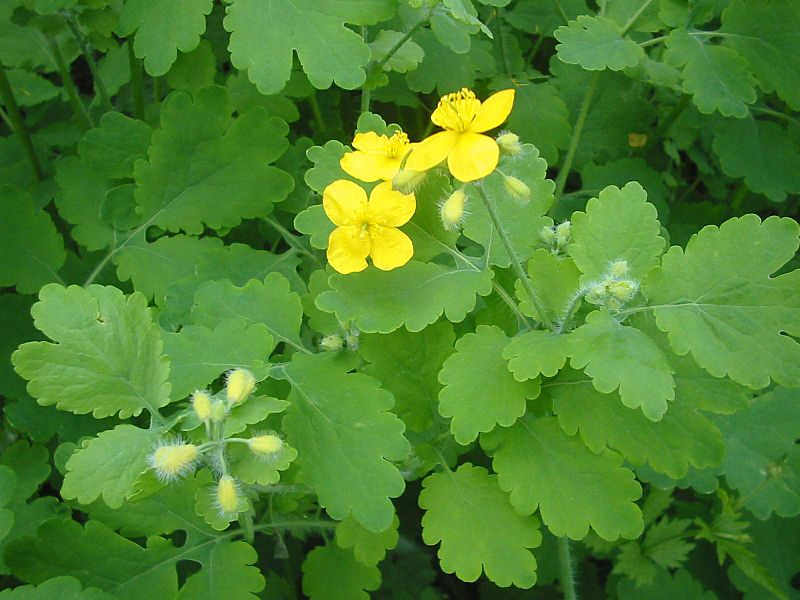
|
|
Common Name: Celandine
|
Chelidonium majus,
Chelidonium, Greater Celandine
|
|
Family
|
Papaveraceae
|
|
Part Used
|
Aerial parts
|
|
Active constituents
|
Isoquinoline alkaloids
especially chelidonine, proteolytic enzymes,
sanguinarine (anticancer), chelidoxanthine,
fruit acids, flavonoids and phenolic acid
|
|
Actions
|
Antibacterial, Choleretic, cholagogue,
hepatoprotective, spasmolytic, mild laxative,
anti-inflammatory, antiviral (topical),
vulnerary (topically), antifungal, antiarthritic,
immunomodulatory, protective against radiation,
anticancer, antigenotoxic
Chinese Actions: 1.
treats Liver Qi Stagnation, Liver Cold-promotes
bile flow, and bowel movement, reduces liver
congestion; Regulates Liver invasion of Stomach
and Intestines. 2. Coronary blood deficiency
–stimulates the heart and circulation relieves
wheezing, 3. Lung Qi constraint, 4. External
Wind cold, damp obstruction-promotes sweating,
reduces fever, 5. Liver Fluid congestion-drains
edema, 6. Topical to promote tissue repair, 7.
Topical wash to strengthen eyes and clear vision
|
|
Indications
|
Biliary dyskinesia (with Turmeric); used to
increase bile flow and pancreatic secretion
(with Milk thistle and Turmeric); Cholangits,
gallstones, Cholecystitis without stones;
cramping pain of GI tract and gall ducts; liver
disease, jaundice ; nausea, chronic bronchitis
Topical for warts, skin
tumors, psoriasis, eye wash to clear vision
(glaucoma)
|
|
Cautions
|
Contact dermatitis and
hepatotoxicity after oral ingestion have been
reported which was associated with high dose
products, no cases of liver failure resulted and
the condition of the patients quickly improves
with the high dose products were stopped; long
term use at higher doses in not recommended; use
with caution if gallstones
|
|
Contraindications
|
(Jeremy Ross)
Discontinue if evidence of liver damage arises.
Pregnancy and lactation
|
|
Herb Drug Interactions
|
None known
|
|
Dosage (use animal doses
where available, otherwise human doses can be
included here but specify)
|
In UK limited dose
Human doses: 1-2 ml of
1:2 liquid extract daily; Dried herb: .5-2g of
dried herb as power or as infusion TID;
Tincture: 2.5-10 ml of a 1:5 tincture TID Take
no longer than 1 month without breaks in the
treatment.
|
Grows
in waste, woodland
Notes:
Patented extract has documented cytotoxic effects
against some cancer cell lines; traditionally used as a
caustic to remove warts and stimulate healing of
indolent ulcers and ringworm. It has been used on cornea
for removal of opacities. Eclectics used as an
unrivalled vulnerary.
Research:
reduced stomach cancer incidence; exerts several
anti-mutagenic effects; anti-platelet effect; strong
antiviral and antifungal effects.
Temperature: neutral (warming with a cooling potential);
Taste: bitter, slightly acrid; Organs: Liver,
Gallbladder, Stomach and intestines, Lung and Heart
It is
native to Europe but widely naturalized in temperate
regions. It possesses a bright orange sap (doctrine of
signature-decongestion for the yellow bile).
Peter Homes
says, “The pungent-warm Celandine essentially treats
conditions of a stagnant, damp and cold nature
accompanied by fatigue, introversion, cold limbs and
constipation. Celandine is much used with vagal
hypertonia and ensuring bronchial or intestinal spasms.”
Traditional use in the West:
Culpeper-opens
obstructions of the liver and gallbladder, treats
jaundice, the juice cleanses the eye from films and
cloudiness, but must be mixed with milk, the juice can
help warts, ringworm, purulent ulcers, itching skin, or
aching teeth. Felter
and Lloyd: acrid
stimulant, liver congestion, biliary catarrh, jaundice
from obstruction of the bile ducts, pain in right
hypochondria (specific symptom), biliary stones; lover
and spleen disorder, migraines, bilious dyspepsia,
gastrointestinal disorders form liver problems,
melancholia, cough with liver pain. Scudder: The cases
in which Chelidonium..greatest influence, tongue much
enlarged, and somewhat pale; mucous membranes full and
enfeebled; skin full and sallow, sometimes greenish;
fullness in hypo; tumid abdomen; light colored feces; no
abdominal pain; urine pale but cloudy, and of high
specific gravity:
Tissue States
treated are torpor and depression
Specific Indications:
Skin pale and sallow; full
pale and sallow tongue and mucous membranes;
greenish-yellow skin; pain under right shoulder blade;
bloating in the region of the liver with pain on
pressure; stools slimy and light-colored or scalous;
hepatic congestion; jaundice due to swollen bile ducts;
sluggish hepatic action; cough, with hepatic pain;
fullness, with tensive or throbbing pain in the right
hypochondria and pain extending to the right shoulder;
melancholia, headaches and gastric wrongs dependent upon
faulty action of the liver.
Preparation:
The fresh green leaves are picked in the spring and
fall. Best if extracted fresh in alcohol immediately or
freeze-dried (use plant material not older than four
months. Somewhat toxic and strong; the dose need not be
great. Homeopathic doses could also be used.
|