|
| Veterinary Botanical
Medicine Association |
| Dedicated to Developing
Responsible Herbal Practice |
| |
| MEMBER WEBSITE |
| |
|
Jasmine C. Lyon,
Executive Director |
|
QUESTIONS?
email
office@vbma.org |
| |
| Established in 2002 by
Susan Wynn, DVM, RH(AHG) |
|
|
|
| |
|
|
| |
|
VBMA Herbal Wiki |
|
|
|
|
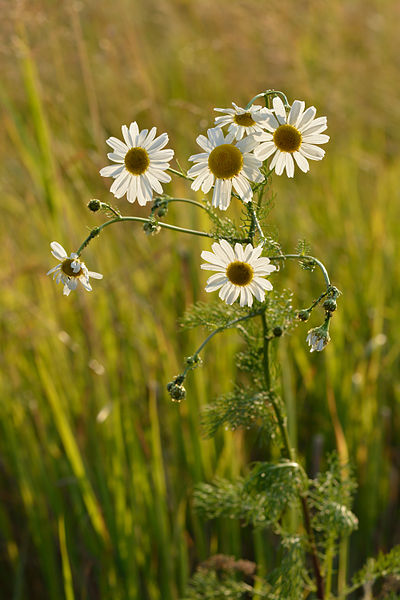
Common Name: Chamomile
|
Matricaria recutita
L; Chamomilla recutita ; related to
Anthemis nobilis, Camomile, flos chamomillae,
matricaire, matricaria flowers, pin heads, sweet
feverfew, German chamomile
|
|
Family
|
Asteraceae (Compositae)
|
|
Part Used
|
Dried Flower heads
|
|
Active constituents
|
Essential
oils: chamazulene; bisabolol and
related sesquiterpenes; Apigenin and flavonoid
glycosides
|
|
Actions
|
Carminative,
spasmolytic, mild sedative, cholagogue,
antiallergic, anti-inflammatory, healing, bitter
tonic, anti-ulcer, antiemetic; TCM actions: 1.
Clear St Heat, Calm St Qi, Calm heart Spirit, 2.
Clear Intestinal heat, 3.Regulate Liver and ST;
clear Liver heat, Liver Yang
rising, Internal Wind; 4. Clear Heat in Skin; 5.
Kidney/Adrenal constraint, 6.Clear Lung Phlegm
Heat
|
|
Indications
|
Internal use:
Dyspepsia, epigastric bloating, mild colic,
impaired digestion, flatulence, restlessness,
insomnia, difficult menstruation, anxiolytic,
travel sickness, nervous diarrhea, teething
pain, allergic symptoms of food intolerance,
asthma, hayfever, acute bronchitis. anorexia,
colic, IBD, and diarrhea, sweeten taste of goat
milk, source of anti-oxidants, tension
Headaches, pediatric seizures,
External use:
inflammation of skin, and mucosa, stomatitis,
wounds, eye wash, hemorrhoids and inhaled for
colds
|
|
Cautions
|
Use
cautiously if used on its own internally during
pregnancy as it is a uterine stimulant.
|
|
Contraindications
|
If known
sensitivity to plants of the Asteraceae family;
theoretically in cats due to coumarin content;
Essential oil during pregnancy
|
|
Herb Drug Interactions
|
Potential to have a synergistic central nervous
system depression with opioid analgesics.
|
|
Dosage (use animal doses where available,
otherwise human doses can be included here but
specify)
|
External use:
Compress, baths, vapor inhalations, rinses:
15-50 g Flower/500 ml water, steep 15-30 min, or
mix 10 fluid extract or 1:2 tincture into 500 ml
water; Cream: apply topically BID-TID;
Vapor Inhalation: 1-5 drops of volatile oil
per liter of water
Internal use:
Dogs: Dried Herb:25-300
mg/kg divided TID
|
|
| |
Indigenous to northern Europe,
found in many countries.
Notes: Energetics: slightly bitter and
pungent, neutral, warming effect but cools inflammation
Organs: ST, In Ht, Liver
Published research: Inhibits
cyclooxygenase and lipoxygenase thus inhibits the
production of prostaglandins and leukotrienes.
Significant antioxidant capacity which is related to
wound healing |
| |
| CULPEPER |
| Culpeper-profitable for all
sorts of agues that come either from phlegm or
melancholy or from inflammation of the bowels; helps
wind and pains in the belly; for treating jaundice and
gently promoting urine. |
| |
| COOK |
| Agreeable tonic properties;
mainly relaxant and only moderately stimulant; expend
their influence somewhat promptly; decided action upon
the circulation, nerves, and uterus and stomach-this
action is expedited and distributed when they are given
as a warm infusion. (Cold infusion has an action more
confined to stomach and uterus.) Decidedly capable of
promoting the menstrual flow; unusual power in
reestablishing suppressed lochia, and the same time
opening us capillary circulation, relieving uterine
pain. Ellington adds when symptoms of la grippe in
children are present, especially where there is
disturbed condition of the digestion, inducing diarrhea,
sour eructations, or acid vomiting and colicky pains.
For the Homeopath; the specific indication is greenish
flocculent particles in the loose water feces of a
patient with diarrhea; slimy yellow with an offensive
odor with excoriation of the external parts; often
muscular twitches with tendency to spasm. |
| |
| FELTER |
| Felter’s specific indications:
Nervous irritability, with fretfulness, peevishness,
impatience and discontent; morbid sensitiveness to pain
and external impressions; sudden fits of temper when
menstruating; muscular twitching; fetid, greenish
feculent alvine discharges or when the stools are green
and slimy or of mixed whitish curds and green mucus,
associated with flatulence, colic, and excoriation of
the anal region; if a child, the head seats easily and
the discomforts of teething. Flatulent colic, tec. Are
transient and intermitting, and the nervousness is
relieved by being carried about in the arms. It is a
stimulant diaphoretic and nerve sedative. |
| |
| HOLMES |
| Chamomilla has a harmonizing
nature; conditions requiring it are characterized by
inflammation, irritation and discharge on the kin and
mucus membrane; oversensitivity, weakness and pain on
the nerve/sensory level, and tension, restlessness and
agitation of the emotional level. |
| |
| WOOD |
| Suited to conditions where wind
(tension) combines wit heat (overstimulation,
excitation, irritation). Thus fever is irregular and
comes and goes; one check red, the other pale; and old
remedy for intermittent fever. It stimulates the body
to put calcium in serum. Also if Chamomile is put in a
sick garden, the other plants will recover. It treats
tissues that are irritated, constricted, and stagnant. |
| |
|
|