|
|
Common Name: Devil’s
Claw
|
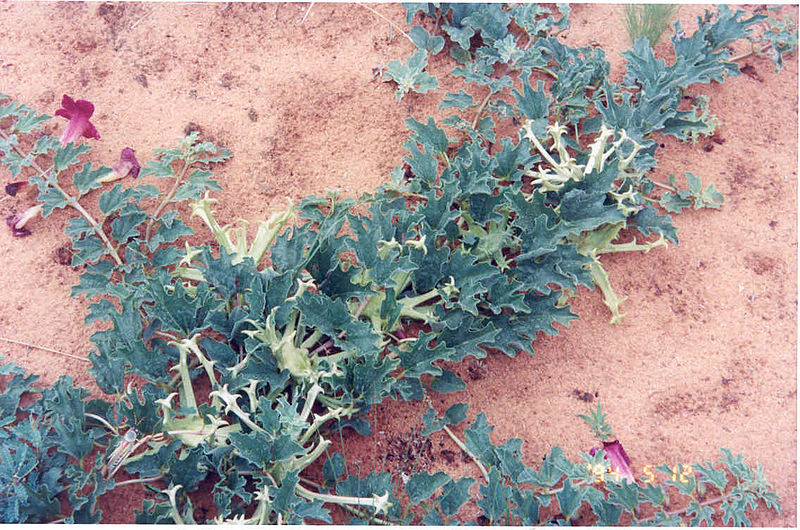
Harpagophytum
procumbent
(Burch.) DC; grapple plant; kanako kamangu,
woodspider, tou, toutje, tswana
|
|
Family
|
Pedaliaceae
|
|
Part Used
|
Secondary root tubers
|
|
Active constituents
|
Iridoid glycosides,
harpagosice, harpagide, procumbide; and their
cinnamic and coumaric acid esters; phenolic
glycosides, flavonoids, triterpenes,
polysaccharides, sterols
|
|
Actions
|
Bitter tonic, anti-inflammatory, anti-rheumatic,
analgesic, ant-microbial; (also, hypoglycemic,
antiarrhythmic, anticonvulsive)
TCM: 1. Clear Damp Heat
and Wind Damp Heat in the channels, move Qi and
Blood in the channels; 2. Tonify and move Qi of
Sp, St
|
|
Indications
|
Rheumatism/muscle pain,
arthritis, bursitis, back pain, tendonitis,
anti-inflammatory, digestive complaints,
dyspepsia, gallbladder complaints with liver
congestion, anorexia, tonic for older animals
with poor appetite, pain in general, uterine
pain and labor pains, fever, kidney and bladder
ailments, headache
|
|
Cautions
|
Threatened
species-only
buy from sustainable sources. Bitters should be
used with caution in esophageal reflux and in
states of hyperacidity. Use caution if
neurological disease, depression and psychosis,
liver and kidney disease, history of allergic
reaction; long term therapy with analgesics is
not advisable.
|
|
Contraindications
|
Gastric ulcers; (but no
adverse reactions have been reported);
compatible with breastfeeding; no adverse
effects during pregnancy
|
|
Herb Drug Interactions
|
Since it inhibits
the activity of some CYP enzymes,
no reported
interactions
but theoretical with antiarrhythmics,
anticoagulants, antihypertensives, and cardiac
drugs
|
|
Dosage (use animal doses
where available, otherwise human doses can be
included here but specify)
|
Small animal: Dried
herb: 50-500
mg/kg, divided TID;
Decoction:
5-30 g per cup of water, ¼-1/2 cup per 10 kg
divided TID;
Tincture:
1:2-1:3 : 1.0-2.5 ml per 10 kg divided TID
Human: Dried herb:
0.5-10 g TID, up to 6 X if needed;
Standardized extract:
1200-2400 mg daily, divided;
Decoction:
boil ½-1 tsp in 1 cup water; simmer 10-15 min
and administer ¼-1 cup TID;
Tincture:
1:2-1:3 3-5 ml TID up to 6X if needed
|
Native to Africa; grows on oxide-rich soil
Notes: Energetics: bitter, cool; Organ: Muscles, joints,
(St, Sp);
Currently in Africa used as
internally for digestive disorders and a bitter tonic,
for pain, including labor, and for fevers; topically,
for ulcers, wounds and boils;
Wichtl-current
use in Europe; digestive, hepatobiliary, and bladder
complaints; arthritis, allergies; diabetes, and general
aging.
Published research:
studied extensively for the treatment of nonspecific low
back pain, arthritis and rheumatism; suppresses
prostaglandin (PG)E 2 synthesis and nitric oxide
production by inhibiting COX-2 and inducible nitric
oxide synthase mRNA expression.
Recent research:
anti-inflammatory effect is through inhibition of
induction of pro-inflammatory gene expression; it
inhibits
acetylcholinesterase and
butyrylcholinesterase; study
indicate that H.
procumbens possesses
spasmogenic,
uterotonic action on mammalian uterine muscles, allowing
an induction and/or acceleration of
labour, as well as for
expelling retained placentas; .The antioxidant effects
demonstrated for both preparations of
Hp may contribute to the
anti-inflammatory and analgesic properties observed for
the plant.
|