|
|
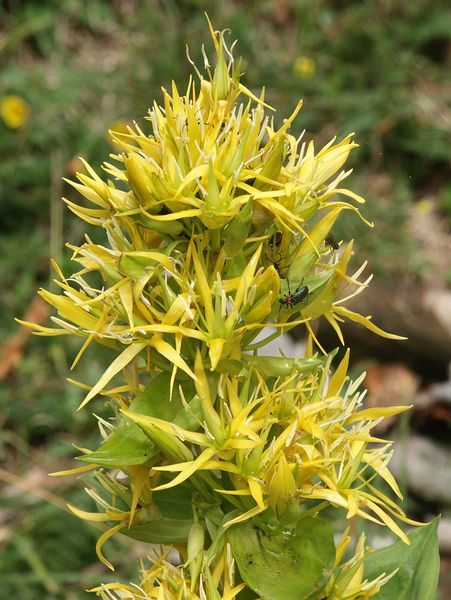
Common Name: Gentian
|
Gentiana lutea;
Gentian
|
|
Family
|
Gentianaceae
|
|
Part Used
|
Root
|
|
Active constituents
|
Iridoid glycoside,
secoiridoid bitters; oligosaccharides;,
xanthones; others including sucrose,
polysaccharides, phenolic acids
|
|
Actions
|
Bitter tonic, gastric stimulant, sialagogue,
cholagogue, antiemetic, hepatobiliary tonic,
hepatoprotective, choleretic, anti-inflammatory
Chinese Actions: 1.
Tonify Qi of Spleen, St, and SI; tonify Qi and
Blood, 2. calm Rebellious St Qi, 3. Cleat Heat
in Stomach and Small Intestine and clears Liver
Fire, and Liver/ GB damp Heat, Clears Intestinal
and genitourinary Damp Heat, 4.Tonify and move
Liver Qi
|
|
Indications
|
Stimulates gastric secretion, bile release from
the gallbladder, bile production by the liver;
loss of appetite, malaborption, anemia,
exhaustion, debility, postfebrile exhaustion,
dyspepsia, asthenia, coated tongue, postprandial
bloating (with Rhubarb)
Stimulating gastric secretion-constipation,
flatulence, abdominal fullness, itching of skin.
Nausea, vomiting
especially during pregnancy or especially with
digestive weakness, heartburn, abdominal pain,
constipation, stimulates pancreatic enzyme
secretion; hepatitis, high blood pressure
|
|
Cautions
|
If have gastrointestinal hyperactivity, duodenal
ulcer, gastroesophageal reflux and
hypercholorhydria; gastric inflammation;
Very sensitive
individuals may occasionally experience
headaches.
|
|
Contraindications
|
Gastric and duodenal
ulcer, hyperacidity, gastric inflammation
|
|
Herb Drug Interactions
|
None known
|
|
Dosage (use animal doses
where available, otherwise human doses can be
included here but specify)
|
Human:
0.7-2.0ml of 1:2 liquid extract per day
|
Grows
is grassy alpine pastures, soil high in Calcium
Taste: Bitter, acrid;
Temperature: neutral-cool; Organs: Sp, St, SI, Liver,
and Gallbladder
Tissue States: constriction, atrophy, torpor
Notes: Research-
gallbladder emptying was increased and prolonged while
protein and fat digestion was enhanced; stimulate
secretion of enzymes in the Small Intestine; increased
gastric secretions; increased appetite
Traditional prescribing:
anorexia particularly after feverish conditions; atonic
dyspepsia, gastrointestinal atony; debility; gout;
amenorrhea; diarrhea; intestinal worms.
Culpeper: strengthens
the stomach, restores the appetite, helps digestion,
refreshes people tired by travel; opens obstructions of
the liver, treats jaundice, helps pains in the sides,
for joint problems, for agues of all kinds, comforts the
heart and preserves it against fainting.
Felter and Lloyd-for
debility and exhaustion and in all cases where a tonic
is required, after prolonged fevers, when recovery
depends on the ability to assimilate food.
Christopher used also
for anemia. Fyfe:
Gentian is an excellent stomachic bitter. Indications:
atony of the stomach and bowels, with feeble or slow
digestion; diarrhea; with relaxation of mucous
membranes; chronic malarial poisoning; atonic dyspepsia
with mental and physical depression; general debility
and exhaustion.
Preparations:
the root is used as a tea, tincture, or extract in
diluted or very small doses. It is often combined with
other substances to lessen the taste.
|