|
|
|
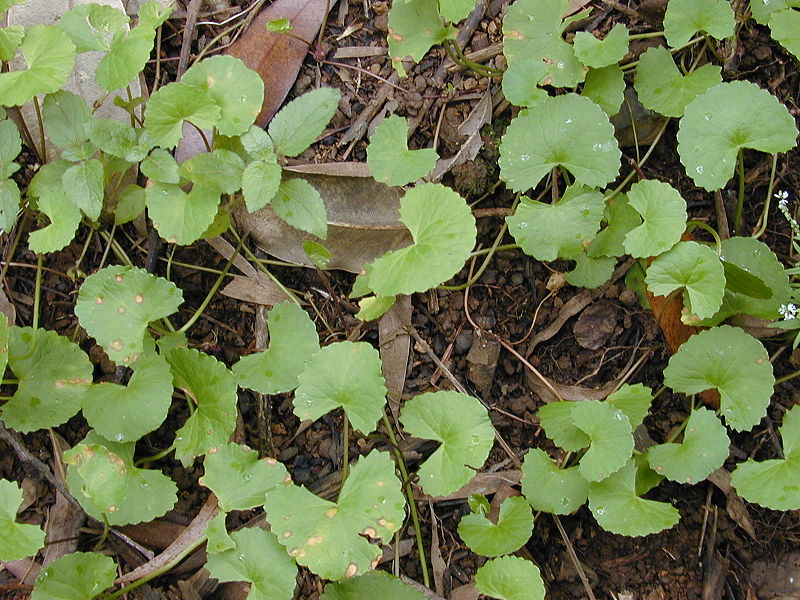
Common Name:
Gotu kola
Latin Name: *Centella asiatica* L., *Hydrocotyle
asiatica* L., Asiatic or Indian pennywort, brahmi in
North and West India, manulkaparni (Sanskrit) in South
India, Kula kudi (Hindi)
Family: Apiaceae
Part Used: Aerial parts, but
whole plant-leaves, fruit, seed, and root can be used
Grows In moist habitats up to 2500m |
| |
Active constituents:
Triterpenes, asiatic acid and madecassic acid; and
derived triterpene ester glycosides, quercetin,
asiaticoside and madecassoside; essential oils,
sesquiterpenoids; phytosterols; amino acids. |
| |
Actions:
Adaptogen, (Rasayana), connective tissue regenerator,
nerve tonic, mild diuretic, alterative, antipyretic,
antispasmodic, antimicrobial, antiviral, antilarval *TCM:*
Yin tonic; Balances* kapha* and *pitta* |
| |
Indications:
*Topical:* Treatment of wounds, burns, and ulcerous skin
ailments and prevention of keloid and hypertrophic
scars, equine granulomatous lesions, acral lick
granulomas, posttraumatic degloving injuries, delayed
wound healing, feline leprosy ulcers, and furunculosis,
photo-protection
*Internal use*: Helicobacter pylori infection with
ulceration of the stomach; aspirin/NSAID induced
gastritis; lymphoma; cognitive enhancement, used as an
alternative for sore, throat, measles, tonsillitis,
hepatisis, venereal diseases and urinary tract
infection; In Ayurvedic, considered nervine tonic and
used for insomnia, stress, nervousness, and disturbed
emotions, and many nervous systems disorders,
bronchitis, epilepsy, dysentery, fever, inflammation,
leucodermaa, periodontal disease, rheumatoid arthritis,
cognitive problems, including Aluminum damage (vaccinosis),
potential for cancer. *Traditional use*: foot and mouth
disease, colic, swelling of the respiratory tract,
contagious abortion, and jaundice. |
| |
Cautions:
Topical sensitivity is possible; caution possible if
preexisting cholestasis |
| |
Contraindications:
None; but a theoretical warning about any herb rich is
saponins being inappropriate in celiac disease, fat
malabsorption, and Vit A, D, E, and K deficiency. |
| |
| Herb Drug Interactions:
May increase sleeping time if given with
phenobarbital; Steroids decrease the effectiveness of
Gotu Kola |
| |
Dosage
(use animal doses where available, otherwise human doses
can be included here but specify):
*External:* 40 % crème *Internal: Human*: *Dried herbs:*
3-10 g TID; *Infusions and decoctions*: 5-30 g per cup
of water, one cup TID; *Tincture:* 1:2 or 1:3: 1-5 ml
TID *Small animal: Dried herb*: 25-300 mg/kg, divided
TID; *Infusion and decoction*: 5-30 g per cup, ¼-1/2 cup
per 10 kg divided TID; *Tincture:*1:2-1:3: 0.5-1.5 ml
per 10 kg divided TID |
| |
Notes:
Energetics:* cold bitter, slightly astringent |
| |
| History:
Remedy against leprosy in Greek medicine. In Ayurvedic
medicine it has been used internally and externally to
treat chronic eczema, scrofula, secondary syphilis,
ulcers, chronic rheumatism, abscesses, lupus
sclerodermas fractures, snakebites, epilepsy, insanity,
infantile diarrhea, bronchitis, asthma, anemia,
toothache, furunculosis. * Ethnoveterinary*-the whole
plant has been used to treat: foot and mouth disease,
colic, swelling of the respiratory tract, contagious
abortion, and jaundice. |
| |
| Published research:
Wound healing-stimulates collagen synthesis, activate
cells in epidermis, and stimulate keratinization and
decreases scar tissue; Gastric ulcer-enhanced gastric
mucin secretion and increases mucosal cell
glycoproteins; improves integrity of the mucosal
barrier; destroys cancer cells; prevents microangiopathy
in people caused by hypertension or diabetes; and
cognitive enhancer by decreasing oxidative stress. |
| |
| Recent research:
treatment for burns, neuro-protection against Aluminum
damage (potential for vaccine, heavy metal damage?)
cognitive dysfunction and mito-oxidative damage;
stimulates neuronal dendritic growth for
neurodegenerative and memory disorders; show promise for
diabetes management, antipyretic and anti-inflammatory
effects are associated with the inhibition of
pro-inflammatory mediators; prevention of ischemic
strokes; pathological anxiety; reduces gingival
inflammation and can enhance periodontal tissue healing;
improves venous stagnation and can treat phlebostatic
sores, and treats cerebral ischemia, epilepsy, stroke,
neuropsychiatric disorders; and inhibit cancer cell
proliferation |
| |
|