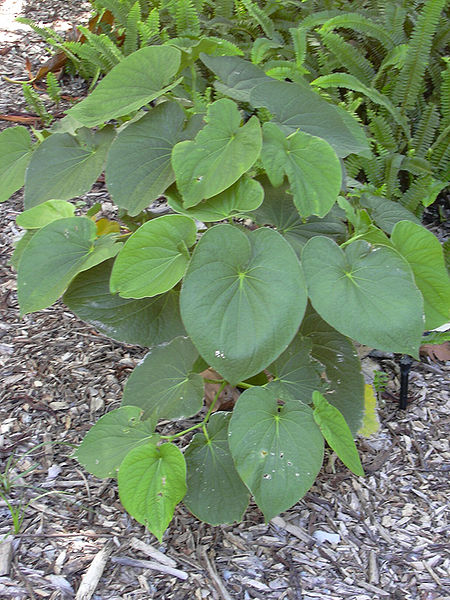
|
|
Common Name: Kava
|
Piper methysticum
G., Kava kava,
yangona, awa
|
|
Family
|
Piperacea
|
|
Part Used
|
Dried rhizome
|
|
Active constituents
|
Kava lactones; kawain,
methysticin, dihydromethysticin,
demethoxyyangonin, yangonin, pungent resins
|
|
Actions
|
Anesthetizing-mucous membranes; topically
antipruritic; anxiolytic, sedative;
antispasmodic, antimicrobial, hypnotic,
anticonvulsant, mild analgesic, sialagogue,
diuretic; (Fyfe considers it to be a stomach
tonic and stimulant)
TCM actions: 1. Kidney
Qi deficiency with damp; promotes urination and
Kidney Qi stagnation; 2. Treats Spleen Damp
|
|
Indications
|
Anxiety-due to fireworks, thunderstorms, stress,
separation and other causes, insomnia, nervous
tension, muscle relaxant,
Interstitial cystitis
and lower urinary tract disorders, chronic
catarrhal inflammations, vesical irritation and
inflammation; vesical atony; gonorrhea, gleet;
Feline inappropriate elimination; rheumatism,
neuralgia, idiopathic or reflex; indigestion;
anorexia, gastric atony; pale and edematous
tissues, indisposition to exertion; dizziness
and despondency ; potential uses in synovial
cell sarcoma, uterine cancer;
trypanocidal
External:
painful wounds and lick granulomas with
calendula
|
|
Cautions
|
Concerns over potential hepatotoxicity-caution
in cases of acute or chronic hepatic disease or
if hepatotoxic drugs are being currently used;
continuous use should not exceed 4 weeks.
Caution is advised in disorders related to
dopamine deficiency, elderly patients, and those
with Parkinson’s disease; pregnancy, lactation,
endogenous depression.
Long term consumption is
associated with pellagroid dermopathy and
malnutrition
|
|
Contraindications
|
Pregnancy or lactation,
and any existing liver disease
|
|
Herb Drug Interactions
|
May potentiate the
effectiveness of centrally acting drugs;
alcohol, barbiturates and psychopharmacologic
agents, L-dopa.
|
|
Dosage (use animal doses
where available, otherwise human doses can be
included here but specify)
|
External:
liniment or lotion
for muscle pain
Small animal: Dried
herb: 25-300
mg/kg, divided TID;
Tincture:
1:2-1:3: 0.5-1.5 ml per 10 kg divided TID
Large Animal: Horse:
dried herb:
1-2 tbsp; if tying up 1 tbsp 4 times a day
Human: Dried Herb:
1.7-3.4 g per day (1-10 g daily);
tincture
1:2-1:3: 1-4 ml TID;
Standardized
extract 60-210
g/ Kava pyrones/lactones per day
|
Native uses in Polynesia-rhizomes are chewed then
fermented.
Notes: Energetics:
Pungent, bitter, neutral, dry; Meridians: Kidney,
Spleen, Bladder
Traditional:
ceremonial intoxicating drink; induce relaxation, weight
reduction,, treats fungal infection, asthma, colds,
cystitis, gonorrhea, headache, menstrual irregularities,
urinary infections, and warts.
Kings:
“neuralgia, particularly of the trifacial nerve,
toothache; earache; ocular pain; reflex neuralgia;
anorexia; dizziness and despondency; gonorrhea; chronic
catarrhal inflammation; vesical irritation ; painful
micturition; dysuria.”
Fyfe
wrote: “acts upon the stomach much like the bitter
tonics, and markedly increases the appetite. It acts
directly upon mucous membranes, quickly restoring their
tone. It is one of our best stomachic tonics, and
greatly improves digestion and assimilation. In chronic
diarrhea it constitutes a useful medicament, and is
especially valuable in cases characterized by large
catarrhal discharges and associated with an atonic
condition of the entire digestive tract; specific action
on kidney, in medium dose, it will speedily produce an
abundant secretion of limpid urine, which is readily
passed. In acute gonorrhea, it is employed with
gratifying results…it is employed in gleet with
satisfactory results and in leucorrhea it often aids. It
is tonic stimulant, sialagogue and diuretic. In Large
doses produce an intoxication of a reserved and drowsy
nature. Felter
adds; “The patient is pale, the urinary product
inconstant in quality; the tissues, especially of feet
and legs, are edematous; patient is indisposed to
exertion, Piper methysticum augments digestion and
promotes better assimilation. The glandular activity of
the digestive tract is increased, natural secretion and
excretion favored, constipation is overcome, and
hemorrhoids, if present, are reduced. It also exerts a
marked curative influence in chronic intestinal catarrh.
In addition to the Genito-urinary effects, which work
presumable by decreasing the blood supply by contracting
the capillaries; it is of some value in acute vaginitis,
chronic bronchitis, rheumatism, and dropsy due to renal
inefficiency; remedy for neuralgic pain; neuralgia of
the stomach and intestines, and neuralgic and spasmodic
dysmenorrhea; abdominal neurosis due to prostatic,
urethral or testicular diseases or pectoral neuralgia
arising reflexly from nervous dyspepsia.
Holmes:
urinary remedy with a relaxant, restorative and
stimulant action; useful with any condition of pain on
urination.
Published research:
successful for treating anxiety; sedation is not
mediated through the GABA receptor complex.
Recent research:
protects against oxidative stress-induced neuronal cell
death through activation of the Nrf2 signaling; in
microglial cells, kava strongly inhibited LPS-stimulated
iNOS induction and NO production; exerts potent and
dose-dependent analgesic activity, inhibiting abdominal
constrictions; increases female sexual drives;
anti-cancer activities, in a dose-dependent inhibition
of cell viability, inhibition of NF-κB, activation of
caspases, and activation of extracellular signal
regulated kinase 1/2 (ERK1/2) and c-Jun N-terminal
kinase (JNK); ERK1/2 and JNK are mitogen activated
protein kinases that play central roles in regulating
cell fate; kava may reduce colon cancer risk; be a
potential therapeutic agent in the treatment of Uterine
Leimyomas; kava root extract reduces tumor growth; has a
pro-apoptotic effect on synovial sarcomas and inhibits
the growth of synovial sarcomas; prevents and treats
adenoid cystic carcinoma; suppresses tumor genesis,
reduces tumor growth in hormonal refractory prostate
cancer; intervenes in NF-κB-dependent pathological
conditions such as inflammation; and has strong
antitrypanosomal effects
|