 |
|
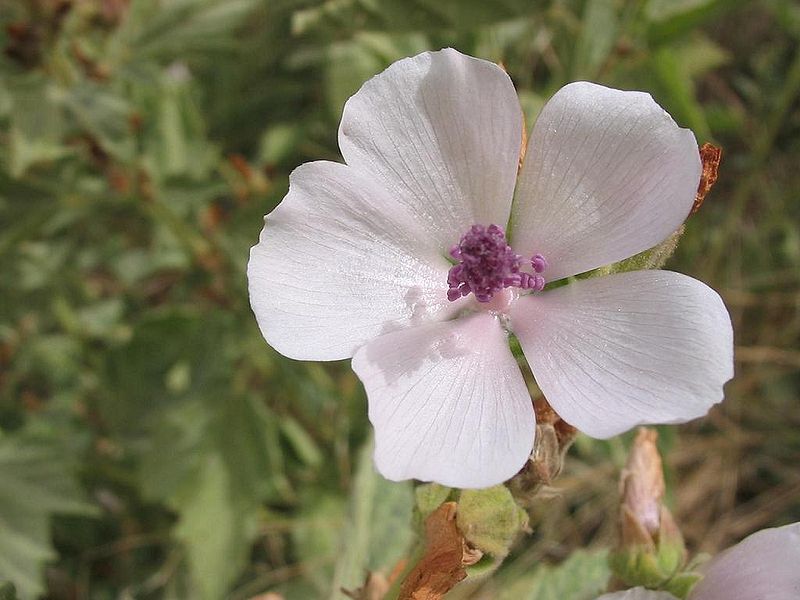
| Althaea officinalis,
Alberto Salguero, Wikipedia |
|
|
|
Common Name: Marshmallow
Latin Name: Althaea officinalis,
aka Marshmallow, Schloss Tea, guimauve tea, malve,
malvavisco, malvavisce, gul-khairu, k’uei
Family:
Malvaceae
Part Used:
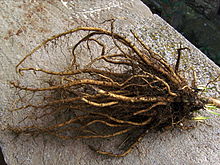
Root from 2-year plants, in early spring or
autumn. The fleshy part is used; leaf can also be used.
Active constituents:
*Root*: 5%-30% mucilage; aspargines, tannins:* Leaf*:
mucilage, flavonoids, phenolic acid
Actions:
Nutritive, *demulcent*, vulnerary, diuretic,
anti-inflammatory, antitussive
Indications:
Digestive complaints, GIitis, gastric ulcer, colitis,
diarrhea, UTI (cystitis, nephritis, urethritis),
stomatitis, laryngitis, bronchitis, and chronic coughs,
whooping coughs. Topically for ruptured abscesses,
ulcers, and open wounds.
Action:
1.Treats Yin and fluids deficiency, clears deficiency
heat; relieves cough and reduces gastric secretions;
2. Clears Intestinal/Stomach Damp Heat, Bladder Damp
Heat; tonify Stomach Yin
3. Moistens and cools the skin; draws pus, and softens
sinews,
4. promotes Lactation
Cautions:
None-*safe* in pregnancy and lactation
Contraindications:
In TCM, with high-dose or tong-term use, use with
caution in Excess Damp or Phlegm, Spleen Deficiency and
Cold
Herb Drug
Interactions: Theoretically reduce
absorption of drugs, glucose, and other soluble
molecules from the gut.
Dosage: (use
animal doses where available, otherwise human doses can
be included here but specify) *Cold infusion is best
preparation* *Small animal: Dried herb*: 25-300 mg/kg
divided TID; *Infusions*: 5-30 g per cup of water given
¼-1/2 cup per 10 kg divided TID; *tincture*: 1:2-1:3:
0.5-1.5 per 10 kg divided TID and diluted
*Human: *dried root: 5-10 g
TID(cold infusion) to 6X a day; Syrup: ¼-1 tsp as
needed;* Infusion*: 5-30 g per cup/ 1 cup TID to 6X;*
Tinctures*: 1:2-1:3: 1-5 ml TID
Native to Europe and Asia,
likes wet marshy ground
Energetics:
sweet, bitter, cool;
Organs: Lung, ST, LI, BL |
|
| DIOSCORIDES |
| Dioscorides used topically for
heat-type swellings, wounds, ulcers, abscesses; as a
poultice for burns and insect bites; urinary dribbling,
painful urination, urinary stones |
|
| GALEN |
| *Galen*: effective for
preventing pus |
| |
| CULPEPER |
| *Culpeper* said clears hot,
choleric, and offensive humors; for hot-type diseases of
lungs, including pleurisy and TB; for hot-type diseases
of bowels, bloody diarrhea, and constipation; for
urinary stones: it opens the passages of the body making
them more slippery; topically to soften and digest hard
swellings and the clear their inflammations and pain. |
| |
| WOOD |
| *Matt Wood*: treats atrophy and
excitation dependent on lack of moisture. It is the most
anti-inflammatory of the common mucilages, curative in
any hot, dry, hard condition. It has a specific
relationship with the kidney, most diuretic of mucilages,
a soothing effect on the kidney and bladder while
increases diuresis. A good specific indication is a
tongue that is red and dry with a glazed, shinning
surface, with horizontal cracks in the glaze. It is very
helpful for individuals undergoing chemotherapy. |
| |
| DALTON |
| *David Dalton:* use of flower
essence for a hardening of the personality,
inflexibility, hardheartedness, intolerance and
inability to feel one’s emotions |
| |
|
