|
|
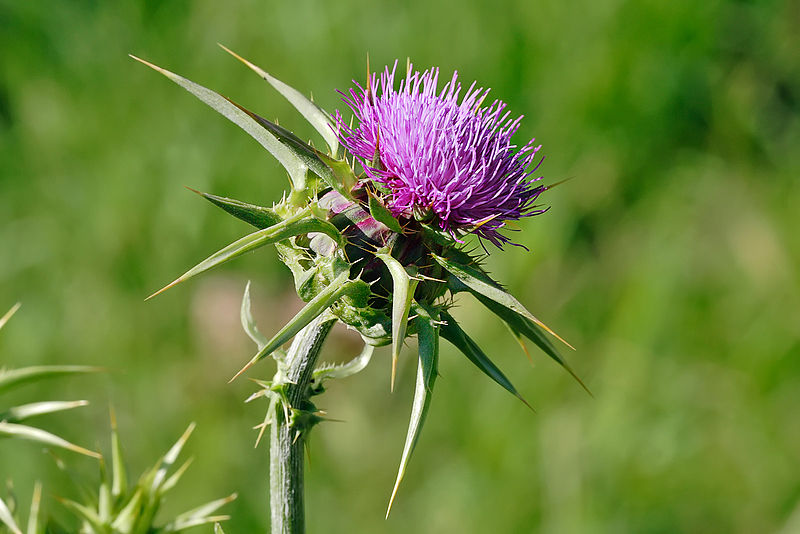
Common Name-Milk thistle
|
Silybum marianum
L., Milk Thistle; Holy Thistle, Marian Thistle,
Our Lady’s thistle Mary Thistle, St. Mary’s
Thistle,, Wild artichoke; Shui Fei Ji.
|
|
Family
|
Asteraceae (Compositae)
|
|
Part Used
|
Seed-collect seed in
late summer
|
|
Active constituents
|
Silymarin, a flavonoid
complex; sterol, fixed oils, flavonoids, lignan,
biogenic amines and mucilage
|
|
Actions
|
Hepatoprotective, demulcent, cholagogue,
choleretic, galactoagogue, antioxidant, hepatic
trophorestorative, alterative, antibacterial
antifibrotic, antidiabetic, hypocholesterolemic,
immunomodulatory, anticancer, nephroprotective
Chinese action: 1.
tonify and move Liver and Gallbladder Qi, Clear
toxin, regulate Spleen Qi 2.Treats Heart Yang
deficiency
|
|
Indications
|
Useful in vast number of Liver condition,
especially as a protectant against
toxins-chemical pollutants, drugs, Amanita
fungus, additives in food; hypercholesterolemia,
hyperlipidemia; varicose vein, hepatitis,
cholangio-hepatitis, hepatic lipidosis, adjunct
for giardia treatment, protection of the
pancreas during pancreatitis or protection from
drug damage; to increase lactation, protect cows
from ketonemia, Insulin resistance in horses;
Dyspeptic complaints,
gallbladder problems, prevent gallstone
formation; skin conditions involving Liver
dysfunction; adjunct to treatment of
gynaecological and skin disorders associated
with Hepatic congestion and accumulation of
toxins; adjunct to treatment of cancer
associated with hepatic weakness and
accumulation of toxins.
|
|
Cautions
|
If allergic to plants in
the Daisy Family; Alcohol based extracts should
be best
|
|
Contraindications
|
No known
|
|
Herb Drug Interactions
|
Herb reduces the
activity of CYP3A4 and other liver enzymes in
vitro; no clinical evidence of negative
interactions; stimulates the activity of p-glycoproten
drug transporter. Reduces insulin requirements
but no other clinically relevant actions have
been reported.
|
|
Dosage (use animal doses
where available, otherwise human doses can be
included here but specify)
|
Small animal
Dried herb: 50-100 mg/kg divided daily (TID)
(triple to quadruple dose if herb is
unprocessed; Dry standardized extract: 10-15
mg/kg, divided daily (70% Silymarin); Fluid
extract(1:1): 1.0-2.0 ml per 10 kg divided daily
and diluted: Glycetract (1:1): 1.0-2.0 ml per 10
kg, divided daily and diluted
Cattle:
dried herb 10 grams daily
Higher doses should be
used if mover severe case of liver damage
|
Grows
on hot, dry waste land
Notes: Energetics: bitter, warm, drying but can be a yin
tonic. Organ: Liver, Gallbladder, Spleen
Tissue State: atrophy
Traditional used:
Specific indication: splenic, hepatic, and renal
congestion, face sallow, appetite, capricious; nervous
irritability; despondency; physical debility; pain in
either hypochondriac; pelvic tension and weight,
congestion of the parts supplied by the celiac axis; and
non-malarial splenic hypertrophy,
Culpeper: opens
obstructions of the liver and spleen to treat Jaundice,
for pain in the sides; promotes urination to treat
edema, treats urinary stones; very effective for
cleansing the blood;
Rademacher-used
as organ therapy; Dr.
Windelband cured 145
out of 190 cases of varicose veins with its use.
Felter and Lloyd
treated congestive conditions of the liver and the
spleen with a wide range of symptoms.
Published research:
antioxidant, inhibit lipid peroxidation, protects
against genomic injury, increases hepatocytes protein
synthesis, suppresses nuclear factor-kappa B, chelates
iron and decreases glutathione destruction in iron
overload, stabilizes mast cells, slows calcium
metabolism, deceases activity in tumor promoters;
protects kidney during chemotherapy; anti-inflammatory
effect for edematous paws, inhibits one cell line of
mammary cancer; helps prevent substance P-like
immunoreactivity loss in sciatic, nerve, typical of
diabetic neuropathy.
Milk
thistle is a good broad-spectrum liver restorative and
decongestant remedy. The seed id specifically
trophorestorative to the liver as it hastens protein
synthesis and generation of new liver cells.
Preparation: Tincture, Fluid extracts; give continually
in small amounts.
|