 |
| Veterinary Botanical
Medicine Association |
| Dedicated to Developing
Responsible Herbal Practice |
| |
| MEMBER WEBSITE |
| |
|
Jasmine C. Lyon,
Executive Director |
| QUESTIONS?
email
office@vbma.org |
| |
| Established in 2002 by
Susan Wynn, DVM, RH(AHG) |
|
|
|
| |
|
|
| |
|
VBMA Herbal Wiki |
 |
|
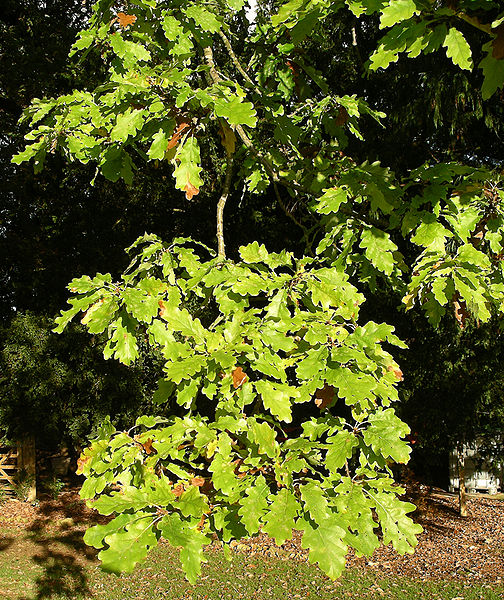
| Quercus alba,
foliage. |
|
|
|
White Oak
- *Quercus alba* is the North American tree in
European (*Quercus robur*) is used both the
species can be used interchangeably.
Oak is indicated by a low body temperature, loss of
fluids, clear, limpid urine, and demineraliztion of the
teeth. Very beneficial to the teeth, improving
both the hard parts and the tendons attaching the teeth
to the jaw. It seems to put calcium into connective
tissue, whether cartilage, tendon, or bone.
Rademacher introduced distilled tincture of acorn as a
remedy for swollen spleen and bellyache emanating from
the region of the spleen. |
| |
| PARTS USED: inner
bark...Michael Moore called it the "basic astringent". |
| |
| TASTE: astringent,
slightly bitter |
| |
| ORGAN: Intestines |
| |
| SPECIFIC INDICATIONS: |
Specific Indications: gum disease,
dental caries; loose teeth, bad breath, canker sores,
bleeding gums; Blue-black, knobby varicose veins in the
legs,
surrounded by yellow infiltration.; hemorrhoids;
ulceration of the bladder, bloody urine, osteoporosis,
swollen spleen; pain in the spleen' goitre |
| |
| ROSS: |
Actions:
1. Reduce diarrhoea: reduce bleeding: astringent,
antidiarrheal,
antihemorrhagic, antimicrobial
2. topical astringent
Oak bark can contain 8-15% tannins. There is some
concern using an herbal
product that contains more than 10% tannin. Although
BHC-no side effects
or contraindications known: Warning that tannins, as
isolated chemicals ,
may inhibit absorption of oral thiamine, metal iron
supplements, or
alkaloid-containing medications. |
| |
| WOOD: |
"It should be used where there is a
symptom pattern of tissue
relaxation with loss of tone, prolapse, outflow of
fluids and loss of
minerals. So the respiratory track would be atonic with
fluids in sinus or
lung; stomach would be damp and mucoid; gums are weak
and loose, intestines
give way to diarrheas. Digestion and assimilation are
poor. It is an old
remedy for swollen spleen and pain emanating from the
region of the spleen."
|
| FELTER & LLOYD: |
| "External- Oak bark depends chiefly
for its virtues upon the tannin it contains..when used
in decoction or poultice upon ill-conditioned ulcers,
with stinking, spongy granulations, in gangrene, as an
astringent for relaxed uvula, with flabby or ulcerated
sore throat, and an injection for leucorrhea, prolapses
rectum and hemorrhoids. Internal- Oak bark is
astringent. Combined with aromatics, as cinnamon or
nutmeg, the decoction is often an effectual means of
checking serious diarrhea and intestinal hemorrhages. In
small doses it is a general tonic for debility, with
tendency to relaxation of tissue and looseness of the
bowels". |
| |
| LYLE: |
used as a douche or enema for
prolapsed uterus, over-relaxed vagina, prolapsed anus,
hemorrhoids, fissures, and as a wash for spongy or
bleeding
gums.
|
| CULPEPER: |
"Jupiter owns the Tree. The leaves
and bark of the Oak, and the acorn cups, do bind and dry
very much. T he inner bark of the Tree, and the thin
skin that covers the acorn, are most used to stay the
spitting of blood, and the bloody flux. The
decoction of that bark, and the powder of the cups, do
stay vomitings, spitting of blood, bleeding at the mouth
or other fluxes of blood, in men or women , and the
nocturnal involuntary flux of men. The acorn in
power taken in wine resists the poison of venomous
creatures. T he decoction resists the force of poisonous
medicines. Galan applied them to cure green wounds.
The distilled water of the oaken bud is good inwardly or
outwardly, to assuage inflammations, and to stop all
manner of fluxes and in pestilential and hot burning
fevers; for it resists the force of the infection and
allays the heat: It cools the heat of the liver,
breaking the stone in the kidneys, and stays women's
courses."
|
| |
| |
|
|