 |
| Veterinary Botanical
Medicine Association |
| Dedicated to Developing
Responsible Herbal Practice |
| |
| MEMBER WEBSITE |
| |
|
Jasmine C. Lyon,
Executive Director |
| QUESTIONS?
email
office@vbma.org |
| |
| Established in 2002 by
Susan Wynn, DVM, RH(AHG) |
|
|
|
| |
|
|
| |
|
VBMA Herbal Wiki |
 |
| COMMON NAME:
Oregon Grape Root |
| LATIN NAME:
Mahonia aquifolium |
| VARIETIES:
Mahonia aquifolium, Mahonia nervosa,
Mahonia repens |
| |
|
BACK TO
HERBAL WIKI INDEX |
|
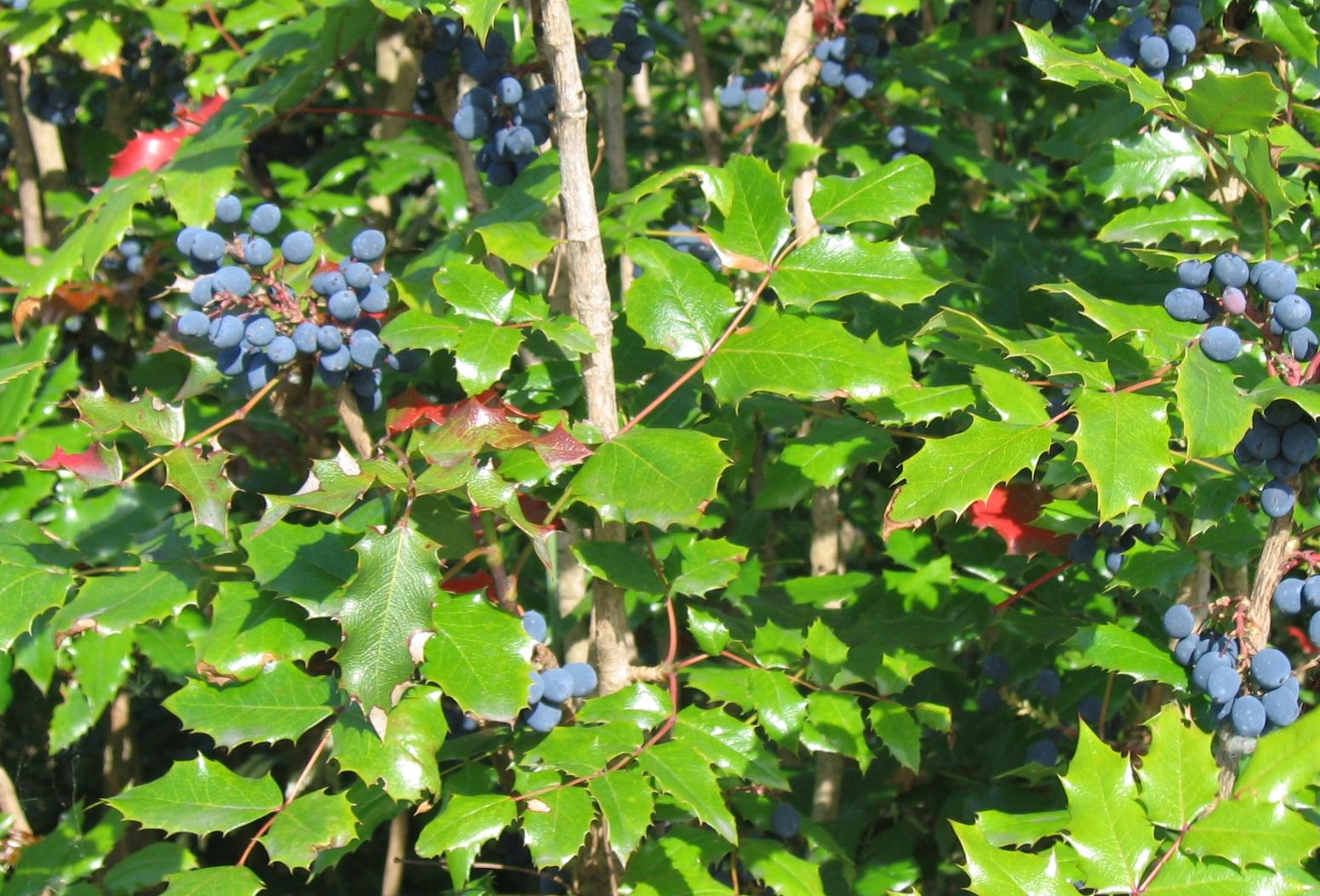
| Marhonia aquifolium
courtesy of
Meggar |
|
|
|
The next
herb is the study guide is Oregon Grape Root;
Mahonia aquifolium.
Berberis aquifolium
Oregon Grape is a member of
the barberry, native to the rocky Mountain area. It was
first used as a bitter tonic to promote internal and
external
secretion in dry and atrophic
diseases. Classified as a mild herb with minimal
chronic toxicity.
Part used: root bark
Energy: bitter, cold;
stimulating while astringing, decongesting, and
relaxing |
| |
| WOOD: |
Tissue
State -atrophy and stagnation
Specific Indications:
poor anabolism, with withering, wasting, dry skin,
scalp, or mucosa, constipation from lack of secretion;
at the same time a buildup of catabolic wast products
with lack of secretion from skin and mucosa; respiratory
allergies, constipation, dry intestine, car
sickness!!!,lymphatic congestion, chronic swelling and
induration of glands with dry atrophic condition,
elevated mononcytes; dry, scaly, itching patches,
inability to sweat!!); rheumatiod arthritis, muscular,
bone and periosteal plains, worse at night |
| |
| SCUDDER: |
| Scudder wrote in 1870-"rights the
wrongs and cleans the Augean stables, sharpens the
appetite, give new tone and new blood to the body, and
comes as near to curing consumption as any remedy known
to us at the time. It is both a blood maker and a blood
cleanser, and as there is no known remedy so virulent to
microorganisms of nearly all varieties, as healthy blood
serum, berberis becomes, indirectly if not directly a
microbicide." |
| |
| ELLINGTON: |
| "Its influence upon the secretion of
the entire glandular structure of the digestive and
intestinal tract is steady, sure, and permanent..It
stimulates all the glandular organs of the body. It
stimulates digestion, and absorption and thus improves
general nutrition...the specific action of this agent is
in scaly, pustular and other skin diseases due to the
disordered condition of the blood...It has cured
persistent acne..it seems of especial value in scaly
skin diseases and in disorders of a non-inflammatory
type, and yet it works nicely in some cases of the moist
variety. It has cured very many cases of salt rheum (??)
even when the symptoms were chronic in character and
greatly exaggerated...It should be prescribed in
glandular indurations and chronic ulcerations both of a
scrofulous and syphilitic type..it is lauded highly in
syphilis.... It was recommended in chronic malarial
conditions in intermittent fevers, and i the stomach,
liver, intestinal and general glandular disorders of the
fevers. It certainly acts as a tonic and corrective to
disorders of the liver. |
| |
| FELTER: |
| "Specific indications-Syphilitic
dyscrasia; chronic skin diseases with blood dyscrasia
with or without syphilitc taint; profusely secreting
tumid mucous membranes; indigestion with hepatic
topor....it stimulates secretion and excretion,,
improves digestion and assimilation; it activates the
lymphatic system and ductless glands; and augments the
renal secretion. It is a corrector and eliminator of
depraved body fluids and assists thereby in good blood
making. It has won its reputation chiefly as a remedy
for the syphilitic taint. The more chronic the
conditions or results of the disease, the more it has
been praised. The bone, mucosa, and cutaneous disorders
following in the wake of syphilis seem to clear up under
its persistent use. It does relieve the night pains and
the shin pain of syphillitic periostitis. It should be
given freely in syphilitc leucoplakia of the tongue,
mouth, and throat, where the mucosa is tumid and
secreting excessively, and when emaciation and weakness
with yellowish parchment-like skin are evident. |
| |
| CHRISTOPER: |
| "Mahonia creates appetite, improving
digestion and absorption, heals the lymphatic system,
purifies the blood, and stimulates the liver to promote
strength and vitality." |
| |
| MOORE: |
| "This herb acts on dry cases. When
the body is dried out it cannot move metabolites.
Mahonia is suited to situations where there is both
faulty anabolism and catabolism-both tissue building and
cleansing. By improving metabolism and elimination,
Mahonia proves to be a very important remedy in the
therapeutics of the skin. It is indicated when muscles,
joints, and bones are inflamed and sore. This is largely
due to poor cleansing and removal of waste from
connective tissue. Due to the presence of Berberine and
related alkaloids-not to be used during pregnancy or
lactation. Gross overdosing may produce termor of the
limbs, lack of muscular power and dullness of the mind." |
| |
|
|