|
| Veterinary Botanical
Medicine Association |
| Dedicated to Developing
Responsible Herbal Practice |
| |
| MEMBER WEBSITE |
| |
|
Jasmine C. Lyon,
Executive Director |
|
QUESTIONS?
email
office@vbma.org |
| |
| Established in 2002 by
Susan Wynn, DVM, RH(AHG) |
|
|
|
| |
|
|
| |
|
VBMA Herbal Wiki |
|
|
|
|
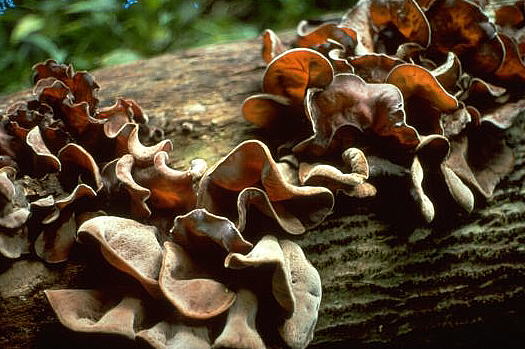
Common Name: Pepeiao
|
Auricularia spp.;
Pepeiao; Mu Er, Hei Mu Er
|
|
Family
|
Auriculariaceae
|
|
Part Used
|
Fruiting body
(ear)-usually steaming
|
|
Active constituents
|
Calcium, carotene, iron,
phosphorus, polysaccharides (Beta-D-glucans),
protein. Its distinctive odour is due to dihydro-5-pentyl=2(3H)furanone
acid
|
|
Actions
|
Antibacterial;
antiparasitic; antitumor;; antiviral;
astringent; drying; Hypoglycemic;
immunomodulatory; laxative; lipid lowering;
painkiller; reduces mucous; refrigerant.
TCM indications: 1.
Qi tonic; tonifies the stomach, refreshes the
brain, strengthens the stomach; 2. Nourishes Yin
and Blood; moistens the lung and strengthens the
lung, promotes production of body fluids; 3.
Invigorate Blood, cools the blood, stops
bleeding; stops pain; 4. Strengthens the Will.
|
|
Indications
|
Most common uses: cancer; chronic fatigue;
compromised immune system; Cardiovascular
disease-angina, vascular sclerosis, poor
circulation, hypertension, anemia; also used for
gastric or intestinal inflammation, vomiting
blood, bleeding haemorrhoids; abdominal pain,
nausea; chronic wounds; conjunctivitis with
ophthalmic bleeding; inflammation of mouth,
throat or tooth; low back pain, rheumatic pain,
muscle spasms; traumatic injuries; make the body
strong and light and to strengthen the will;
vaginal discharge, abnormal uterine bleeding
(specific indication);dry cough with little
sputum, soughing blood; UTI’s; general weakness;
Use as a food: also used
to detoxify environmental pollution
|
|
Cautions
|
Not to use during
pregnancy or lactation
|
|
Contraindications
|
Has been shown to
prevent egg-implantation, not to be used if
trying to conceive.
|
|
Herb Drug Interactions
|
None reported; but it
has potent anti-platelet effects; so caution
|
|
Dosage (use animal doses
where available, otherwise human doses can be
included here but specify)
|
Human daily dose- 10-30 gram.
|
|
| |
|
Notes: Auricularia likes
to grow on elder and spruce trees and looks like a human
ear
Energetics: sweet, neutral
Hippocrates: used
as a moxa for kidney problems or low back pain
TCM: considered
specific for bleeding especially from the uterus and
haemorrhoids, very useful to replenish energy after
childbirth, post-partum thrombo-phlebitis, blood
clotting and inflammation of the veins after delivery.
It has been used for thousands of years as a stomach
tonic. Traditionally it was boiled in mild and used to
treat inflammations of the throat. (Doctor of signature,
it hymenial surface resembles the fauces in the throat.
Linnaeus wrote that
was used in eye complaints, inflammations and angina. In
Ireland, it is used to treat jaundice, and in
Scotland-gargle for sore throat. In Germany, it is
soaked in rose water and applied to styes and infected
eyelids.
Research: it has
strong anticoagulant properties; help regulate glycogen
production, storage, and breakdown of bioavailable
monosaccharides by the liver; anti-tussive effect found,
free radical scavenging activity with a significant
production of nitric oxide, antioxidant effect; can
lower blood glucose, cholesterol, triglycerides and
lipid levels; improve heart function; exhibits
inhibitory effect against Helicobacter pylori ,
potent activity against sarcoma, and restricts growth of
Bacillus cereus, E. Coli, Proteus vulgaris, and
Staph. aureus.
|
| |
| |
| |
|
|