|
| Veterinary Botanical
Medicine Association |
| Dedicated to Developing
Responsible Herbal Practice |
| |
| MEMBER WEBSITE |
| |
|
Jasmine C. Lyon,
Executive Director |
| QUESTIONS?
email
office@vbma.org |
| |
| Established in 2002 by
Susan Wynn, DVM, RH(AHG) |
|
|
|
| |
|
|
| |
|
VBMA Herbal Wiki |
|
|
|
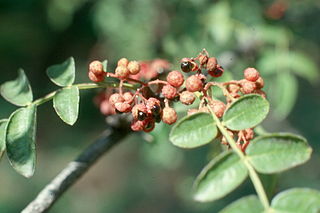
| Prickly Ash is a small tree,
large shrub; with large spine-tipped corky lumps in her
bark. Americanum is native to the North Eastern US
while Z. clava-herculis is native to Southern U.S. It
is found in old fields that are abandoned and returning
to forest. The sharp thorns keep out intruders and
allow nature to reassert her dominion. So a signature
of doctrines-that is a powerful remedy for torturous
pain. |
| |
| (This herb really tastes prickly, it
is almost impossible to get cats to eat it voluntary.
The herb can be taken homeopathic specific for
neurasthenic patients who are thin, emaciated; poor
assimilation with insomnia and occipital headache.
Actually reading the proving of Xanthoxylum, it sounds
like Lyme disease; lots of neuralgic shooting pains,
pricking and throbbing sensation with flashes of pain in
the hand; sciatica, anterior crural pain. Hmm....) |
| |
|
Part used: bark or fruit
Temperature: hot (fruit is
more warming)
Energetics: acrid, aromatic,
bitter
Meridian: Ht, Sp, St., and
Intestines
|
| |
|
Action: (From Jeremy Ross)
1. Warm and move Qi and Blood in the channels and
vessels- a circulatory stimulant
2. clear Exterior Wind Cold Damp, move Qi and blood,
clear Interior Cold, Damp, and Phlegm- so it can
treat acute myalgia or rheumatism from exposure to
Damp Cold; it is a diaphoretic, circulatory
stimulant, anticatarrhal, alternative,antirheumatic,
nervine tonic, dermatological agent
3. Tonify, warm, regulate St and intestines, assist
Spleen to transform damp and Phlegm
4. (Peter Holmes) Increases the Qi, replenishes
deficiency and generates strength; stimulates the
nerves and enhances immunity; exhaustion due to
overwork: Prickly Ash possess long-range restorative
effects that work as an endocrine stimulant working
on the hypothalamus and pituitary.
5. Promotes urination and resolves toxicosis
|
| |
| Samuel Thomson used Prickly Ash as
one of his "diffusives"- a remedy that causing a
diffusing sensation through the nerves and act as
stimulating catalysts in a formula. The Native
Americans used the bark of the root as a specific for
gonorrhoea. (only in the BHP, did I find lots of
indications of urinary track stuff) From this came the
popular use as a remedy for debility of the mucosa. It
improves capillary circulation, bringing the blood to
the skin and mucosa. |
| |
| FELTER |
Specific indications: Prickly ash
impresses the secretions and the nervous and circulatory
systems. The bark, when chewed, imparts a sweetish
aromatic taste, followed by bitterness and persistent
acridity; The drug has remarkable sialagogue
properties. Swallowed it warms the stomach and augments
the secretion of the gastric and intestinal juices, and
probably increases hepatic and pancreatic activity. The
action of the heart is strengthened, the pulse slightly
quickened, and the glands of the skin are stimulated to
greater activity.
Therapy-"Is particularly grateful in stomach disorders.
It is an ideal gastric stimulant, and as a remedy for
simple gastric atony it ranks well with capsicum. It is
also of value in constipation when due to deficient
secretion. It was greatly valued in spasmodic
conditions of the bowels with colic, and in choler
amorbus in weak individuals, and to restore tone and
normal secretion after attacks of epidemic dysentery.
As a stimulant to sluggish membranes, prickly ash may be
given internally in dry, glazed pharyngitis with crusts
of adherent, dried mucus. Of its alterative power there
is no question, and prickly ash is an ingredient in "Trifolium
compound" (Barbara, do you know what else is in this? I
think it might be one part Leptandrin and four parts of
Prickly Ash bark but I am not sure) which has been used
in extensively in chronic syphilitic dyscrasia. (it
renders syphilitics more amenable to reparation of
tissues. A tincture of prickly ash berries is the best
drug that can be given in so-called chronic muscular
rheumatism; and it is not without value in lumbago and
myalgia. Chewing Prickly ash bark is a domestic
custom for the relief of toothache.
It should also be remembered when nerve force is low and
in the recuperative stage from attacks of neuritis or
other forms of nerve involvement in which function is
greatly impaired but is yet capable of restoration. |
| |
| COOK |
| The circulation, skin, salivary
glands ,and lymphatic system feel most of its influence;
the serous and mucous tissues, and the kidneys, also
being acted on. It is suited only to languid
conditions, an should mot be employed when the stomach
is irritable. A warm infusion favors full outward
circulation and is of service in all cases of capillary
stagnation with blunted sensibilities, as recent colds
from exposure, colic from exposure. In sub-acute and
chronic rheumatism, it is an agent of the most excellent
qualities. |
| |
| MATTHEW WOOD -
talks about Prickly Ash treating a depressed tissue
state: |
|
Specific Indication:
Writhing in agony; torment of the most intense kind;
nerve damage; numb, tingling, painful: Hemiplegia (
Bell's palsy), nerve debility, withered, weakness.;
Head sores; weak digestion; edema; Cold extremities
and joints, arthritis, rheumatism.
|
| |
| BHP: acute or chronic urinary
inflammation, prostatis, enuresis; small urinary stones
due to phosphate or uric acrid. |
| |
| Prickly Ash Berry is like the
related Sichuan peppercorn; Chuan Jiao. |
| |
|
|