 |
| Veterinary Botanical
Medicine Association |
| Dedicated to Developing
Responsible Herbal Practice |
| |
| MEMBER WEBSITE |
| |
|
Jasmine C. Lyon,
Executive Director |
|
QUESTIONS?
email
office@vbma.org |
| |
| Established in 2002 by
Susan Wynn, DVM, RH(AHG) |
|
|
|
| |
|
|
| |
|
VBMA Herbal Wiki |
 |
|
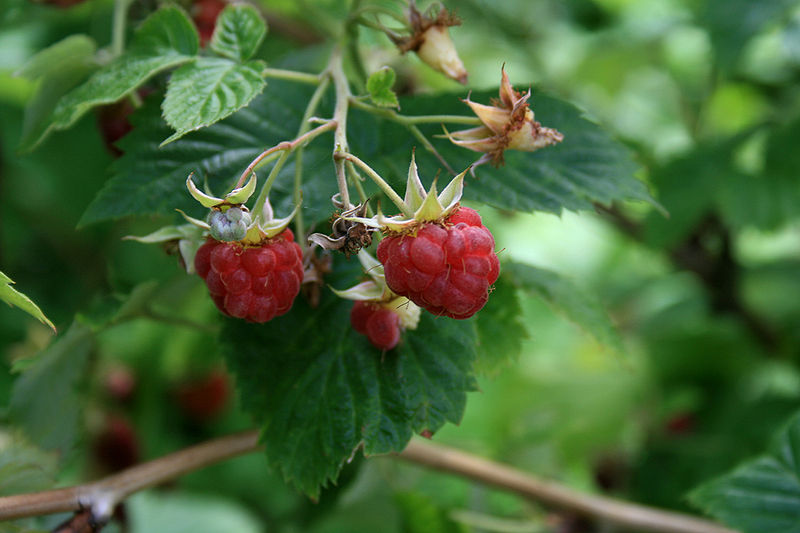
| Rubus idaeus |
|
|
|
*Rubus idaeus*, Raspberry has a
perennial root system with biennial stems. It is Native
to Europe and Northern Asia growing in forests and
clearings. It is an
astringent to help bind the intestines and reduce
diarrhea, making it useful for IBD. Classified as
a mild remedy with minimal chronic toxicity.
Temperature: neutral, cool
Tastes: bitter, sour-astringent
Organs: Uterus and Intestines, Spleen,
liver, kidneys
Properties: hemostatic, astringent,
mild alternative, parturient.
Part used: dried leaflets
Actions:
1. tonify and regulate Uterus- Treats uterine Qi
deficiency and stagnation; uterine tonic, uterine
regulator and astringent. Helps to prevent miscarriage,
and to strengthen the reproductive system for pregnancy;
helps to normalize contractions and ease labor, and
reduces bleeding after labor, can also treat prolapsed
uterus as a douche.
2. bind intestines and reduce diarrhea, treats Qi
deficiency; astringent especially in children, can be
used in hemorrhoids.
3. Reduces inflammations and promotes tissue repair,
benefits the lungs and throat- useful in bronchitis,
hoarseness, spongy gums
4. Promotes and harmonizes urination and relieves
irritation
5. Stimulates and harmonizes digestion
Fruits: Blood and yin tonic- used for
anemia. It also sweetens and cools the blood and
regulates menses. |
| |
| HOLMES |
| *Pete Holmes* considers it to
be a trophorestorative herb for the uterus with a wide
nutritive content. |
| |
| COOK |
| *Cook* writes of Raspberry-"The
leaves of red raspberry are mildly astringent, and of a
peculiarly soothing nature, being very acceptable to the
stomach, always leaving a slight tonic impression, often
allaying nausea and vomiting, and not unfrequently
soothing and sustaining the nervous system. Their
infusion is one of the mildest and most suitable
astringent tonics in sub-acute dysentery and diarrhea,
lessening the discharges without abruptly checking them,
and soothing instead of exciting the bowels. It exerts
a moderate impression on the kidneys, and may be used
for mild catarrh of the bladder. Dr. Elliotts used a
strong infusion with Myrrh to treat diabetes. It is
found to exert a fine influence on the uterus,
sustaining it in flagging labor....It also anticipates
flooding and relieves after-pains. As a wash, it is
excellent in recent opththalmia, especially in infants." |
| |
| FELTER |
| *Felter* writes that the fruit
of Rubus idaeus, an infusion of the leaves is useful in
the diarrhea of relaxation with copius watery discharge.
The fruit as prepared in a syrup is highly prize as a
flavoured vehicle for medicines. Diluted and iced it
forms an agreeable acidulous drink for fever patients. |
| |
| CHRISTOPHER |
| *Christopher* used if for
diarrhea in children and during pregnancy to quiet
premature pains, reduce hemorrhage and prevent
miscarriage. |
| |
| HUTCHENS |
| *Alma Hutchens* wrote that in
addition to Raspberry being "a long established remedy
for dysentery and diarrhea, it will remove canker from
mucous membranes, at the same time toning the tissue
involved,. It is used in relief of urethral irritation
and is soothing to the kidneys, urinary track and ducts.
compound of : Tincture of bayberry, *Myrica cerifera*
and raspberry in water three or four times a day is a
useful solution for the uterus and to stop hemorrhages.
Raspberry leaf tea can be taken freely before and
during confinement; it will strengthen and prevent
miscarriage and render parturition less laborious. The
infusion will also relieve painful menstruation and ail
the flow." |
| |
| |
|
|