 |
| Veterinary Botanical
Medicine Association |
| Dedicated to Developing
Responsible Herbal Practice |
| |
| MEMBER WEBSITE |
| |
|
Jasmine C. Lyon,
Executive Director |
|
QUESTIONS?
email
office@vbma.org |
| |
| Established in 2002 by
Susan Wynn, DVM, RH(AHG) |
|
|
|
| |
|
|
| |
|
VBMA Herbal Wiki |
 |
| COMMON NAME:
Siberian Ginseng |
| LATIN NAME: Eleutherococcus
senticosus |
AKA:
Devil’s bush, thorny ginseng, devil’s
shrub, wild pepper,
Ci Wu Jia |
| |
|
BACK TO
HERBAL WIKI INDEX |
|
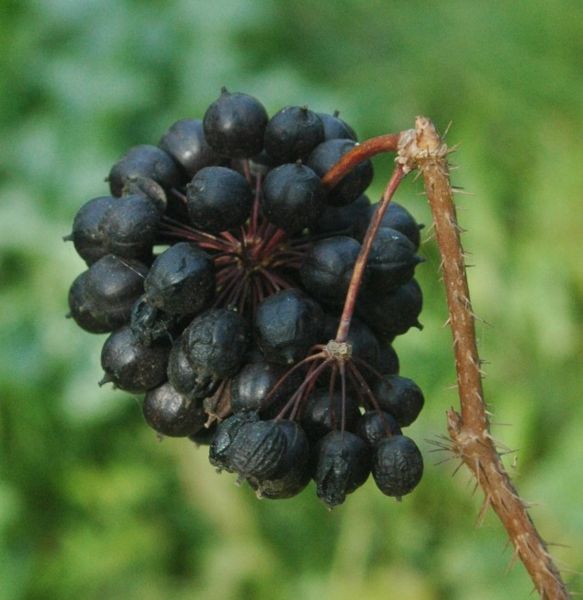
| Eleutherococcus
senticosus, Stanislav Doronenko, Wikipedia |
|
|
|
|
Common Name
Siberian Ginseng
|
Eleutherococcus
senticosus,
Devil’s bush, thorny ginseng, devil’s shrub,
wild pepper, Ci Wu Jia
|
|
Family
|
Araliaceae
|
|
Part Used
|
Dried bark from root and
rhizome
|
|
Active constituents
|
Eleutherosides, phenyl
propanoids; triterpenoid saponins, volatile oils
and polysaccharides; lignans
|
|
Actions
|
immune
modulating, stimulant or sedative; antioxidant,
anti-inflammatory, nervine and Adaptogenic
TCM: 1) Tonifies Qi,
Strengthens the spleen and Kidney; 2) Calms the
Shen
|
|
Indications
|
Stress,
chemotherapy protection, fatigue, hypertension,
ischemic heart disease, immune compromise,
infertility, menopause, recuperation from
disease or surgery, radiation protection, tonic
for geriatric patients. Possibly useful in
cancer, diabetes, depression, alcoholism and
mental disorders. Considered to be less
stimulating than Panax ginseng. Potential
veterinary indications include aiding recovery
from acute and chronic disease, for pound
animals under undue stress, to improve
performance of athletic animals, prophylaxis
against stress, improving productivity in food
animals, allergic skin disease, head and brain
injuries, adjunct to radiation therapy, adjunct
therapy for cancer to decrease side effects of
conventional therapy, thrombosis in cats,
increasing fertility in bulls, non insulin
dependent diabetes; DIC, pulmonary
thromboembolism
|
|
Cautions
|
Quite safe but can be
too warming or stimulating in some cases
|
|
Contraindications
|
May be too warming in
summertime; possibly if high blood pressure;
some worry about use during pregnancy
|
|
Herb Drug Interactions
|
? one report of digoxin
interaction; increases effect of hexobarbital,
inhibits its metabolic break down; increases
effectiveness of antibiotics
|
|
Dosage (use animal doses
where available, otherwise human doses can be
included here but specify)
|
Human:
(from William Mitchell) 6 mg per kg BID, or 90
drops of a tincture, BID; 30 drops in ½ tsp.
glycine in a cup of hot water; (Matt Wood): 1-10
drops 1-3 times a day
Dried herb:
3-10 g TID; Infusions: 5-30 g per cup of water,
with o cup TID;
Fluid extract:
1-2 ml TID; Tincture: 1:2-1:3: 1-5 ml TID
Small animal:
Dried herb:
25-400 mg/kg divided daily;
infusion and
decoctions:
5-30 g per cup of water; 1/4-1/2 cup per 10 kg
divided;
Tincture:
1:2-1:3: 0.5-2ml per 10 kg, divided daily
|
|
| |
 |
|
Notes: indigenous
to North China, Southeast Asia, Japan, Korea, and
southeast Russia
Energetics: warm,
slightly sweet
Ellen Hopman:
individuals who have been weakened by the “enervating
influence of civilization”. It also works on people who
have been weakened by prolong stress, environmental,
psychological, physical.
Matthew Wood:
Treats an atrophied tissue state, has a normalizing
effect throughout the endocrine system. It improves
response to environmental stress; causes a gentle
warming effect toward the periphery while reducing
excess internal heat. Blood circulation and
cardiovascular health are improved; regulate the thyroid
to then better adjust to changing metabolic demands in
the cells. It decreases core heat but increases
peripheral warmth; stabilizes blood sugar levels; acts
on exhausted adrenals; Specific indications: brain fog,
nervous exhaustion, insomnia, hyper- or hypothyroidism
due to hypothalamic stress; heart palpitations; sore
limbs, strengthens the periphery to hold in the sweat!
Traditional use:
rheumatoid arthritis, insomnia, and dream-disturbed
sleep; acute and chronic gastritis, as a diuretic, to
treat impotence and regulate blood pressure; tonic for
improving mental and physical capacities in weak and
exhausted.
Published research:
increases glycogen storage in muscles; reduced
pathological effects of brain lesions in mice; inhibit
tumor growth; improves mood; increases sperm count;
reduces number of stillborn; increases growth yield in
food producing animals; effective in treating angina;
neurasthenia; effective in increasing white blood cells
counts; and reduced beta-lipoproteins!!
|
| |
| |
| |
| |
| |
| |
|
|