|
| Veterinary Botanical
Medicine Association |
| Dedicated to Developing
Responsible Herbal Practice |
| |
| MEMBER WEBSITE |
| |
|
Jasmine C. Lyon,
Executive Director |
|
QUESTIONS?
email
office@vbma.org |
| |
| Established in 2002 by
Susan Wynn, DVM, RH(AHG) |
|
|
|
| |
|
|
| |
|
VBMA Herbal Wiki |
|
|
|
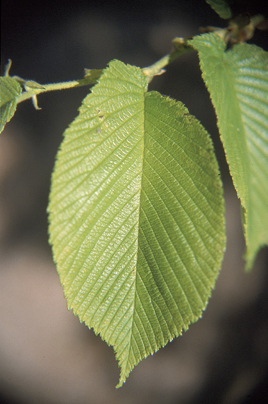
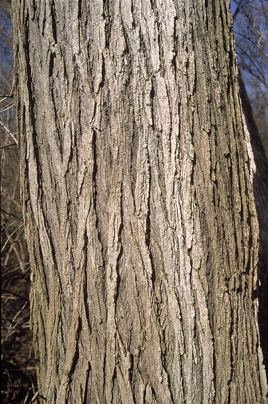
Slippery Elm, Ulmus fulva/rubra...note
that the use of this impressive herb should be
restricted to only those cases that really need it.
It is Native to ravines and valleys where water is
abundant in the Eastern Woodland of North America.
Notes: Restricted use!! Although
less susceptible to Dutch Elm disease, the large trees
are endangered, substitute wherever possible with herbal
Marshmallow
Common Name: Slippery elm bark
Latin Name: Ulmus fulva/rubra;
Slippery Elm*; other names: Red elm, Indian elm, sweet
elm, ulme, orme, olmo, rotulme
Family: Ulmaceae
Part Used: Inner bark, which
should be collected in the spring or fall
Active constituents: Mucilage (a
mixture of polyuronides that consist of sugar and uronic
acid units that form a hydrocolloid in the gut),
tannins, phytosterols, sugars
and minerals, especially calcium, magnesium, phosphorus
and potassium.
Actions: Demulcent, emollient,
antitussive, astringent, nutritive, laxative
TCM :
1. Yin tonic, moistens dryness, clears deficiency heat,
benefits the throat and relieves coughing;
2. treats bladder damp heat
Indications: Inflammatory bowel
disease, diarrhea, irritable bowel syndrome, and GI
disease that is fiber responsive; acute gastric ulcers,
gastritis, gastric
catarrh, weakness of stomach, mucus colitis; dry cough,
perineal fistulas, anal gland abscesses; feline lower
urinary tract disease; topically for burns, as a
sweetener and demulcent; as a nutritive is debilitated
Cautions: If the stomach is very
weak and Slippery Elm causes intestines damp with
indigestion, a little pungent digestive stimulant such
as Clove, Fennel, or
ginger should be added.
Contraindications: Know allergy;
excessive dosing can cause too much of the intestinal
secretion. Resulting in a dried-out condition. Maximum
of 21 day course
recommended by Eva Graf.
Herb Drug Interactions:
Absorption of drugs from the gut may be altered if they
are administered simultaneously
Dosage: (use animal doses where
available, otherwise human doses can be included here
but specify) fiber is best extracted in cold water
Small animal: dried herb: *50-400 mg/kg
divided daily (TID)added to moist foods; *infusion of
powder*: 5 g per cup of cold water, administered at a
rate of ¼- ½ cup per 10 kg, divided daily (TID);
*tincture*: 1:2-1:3, 1.0-2.0 ml per 10 kg divided TID
and diluted or combined
Human: Dried:* 5-10 g TID; *Infusion of
powder:* 5-30 g per cup of cold water, with 1 cup TID;
Tincture: 1:2-1:3: 1.0-5.0ml TID
Energetics: sweet, bland, cool moist
Organs: Lung, St, LI, Bladder |
| |
| TRADITIONAL USE |
| Native Americans used the thick
mucilaginous bark as gruel for malnourished, sick and
convalescent people when the strength of the system
needed to be rebuilt, lubricant for throat, the bowels
and as a lubricant for delivery. |
| |
| EBERLE |
*Dr. Eberle* wrote that is has
a “specific action
in dysentery or chronic diarrhea.” |
| |
| SHOOK |
| *Edward Shook *wrote “It is
most healing to the lungs, soothing and checking cough,
building up the tissues and preventing or checking the
wasting of tissue.” |
| |
| RAFINESQUE |
| Rafinesque* reported that
slippery elm was “a specific to procure easy labor to
pregnant women by using the tea for 2 months previous.” |
| |
| FELTER |
| *Felter* added that “it is one
of the best agents to use after poisoning by irritants,
to allay distress and protect the inflamed tissues.” |
| |
| HOLMES |
| Holmes: nutritious enough to
count as a survival food. Most pertinent condition is
as a mucogenic demulcent are for Yin and Fluid
deficiency; provided a welcome relief in lung Yin
deficiency and stomach Yin deficiency, relieving
irritation, dryness and gastric ulcerations. |
| |
| WOOD |
| *Matt Wood* also says that “it
is a tonic food/medicine used to rebuild patients
run-down by fevers, disease and malnutrition and exerts
a specific influence on the mucosa of the respiratory,
digestive, and sexual/urinary tract, to promote
lubrication, cleansing, cooling, nutrition, and healing.
In the digestive tract, it neutralizes excess acidity
wit it alkaline salts, thus reducing stomach acidity and
ulceration. It combines with and emulsifies fats and
oils, thus assisting digestion in the small intestine.
It contains fruits sugars, which are attractive to the
healthful bacteria that live in the large intestine. As
a lubrication substance, it helps normal or hard,
scybalous stool pass and irritated, constricted part of
the intestine or and irritated fissured, torn rectal
sphincter. Chronic diarrhea and colitis will often
cause constriction in the intestinal tract; slippery elm
soothes the tissue and softens the stool so that it can
pass by better. The tea is taken for a direct effect on
inflammation of the mouth and throat; Treats a tissue
state of atrophy. |
| |
| LESASSIER |
| *William Lesassier*felt that
Slippery Elm had a very profound nerve-relaxant
capacity. |
| |
|
|