 |
| Veterinary Botanical
Medicine Association |
| Dedicated to Developing
Responsible Herbal Practice |
| |
| MEMBER WEBSITE |
| |
|
Jasmine C. Lyon,
Executive Director |
|
QUESTIONS?
email
office@vbma.org |
| |
| Established in 2002 by
Susan Wynn, DVM, RH(AHG) |
|
|
|
| |
|
|
| |
|
VBMA Herbal Wiki |
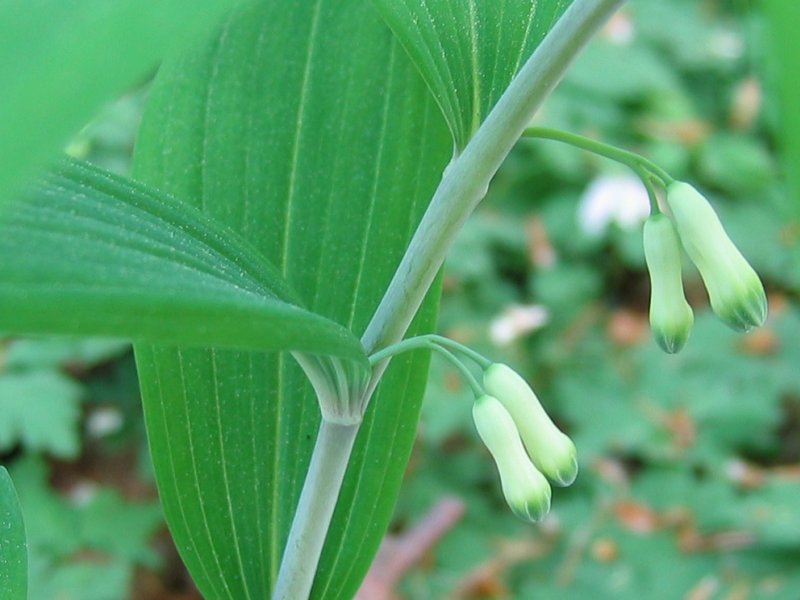 |
| COMMON NAME:
Solomon's Seal |
| LATIN NAME:
Polygonatum
multiflorum |
| AKA:
Lady's Seal, David's Harp, Ladder to
Heaven |
| |
|
BACK TO
HERBAL WIKI INDEX |
|
| Polygonatum multiflorum,
Fabelfroh,
Wikipedia |
|
|
|
|
Common Name-
Solomon’s Seal
|
Polygonatum
multiflorum;
and P.
biflorum;
other common names-Lady’s seal
|
|
Family
|
Lily family (Liliaceae)
|
|
Part Used
|
Rhizome; but leaves can
be used as a tea; berries are toxic- emetic
|
|
Active constituents
|
Saponins, asparagin;
cardioactive glycoside, convallarin; mucilage,
tannins; potassium oxalate, traces essential
oil; starch; saccharides; gum; pectin; trace
minerals
|
|
Actions
|
Trophorestorative for
any ligament/skeletal issue; vulnerary;
anti-aging; cardiotonic; anti-tussive;
Adaptogenic qualities; nutritive; demulcent;
moistening, lubricating, and nourishing tonic;
TCM: 1) Yin tonic-moistens dryness and generates
fluids; moistens the lungs and intestines,
relieves coughing and constipation; 2) Spleen Qi
tonic-increased intestinal absorption and
relieves fatigue; increases Heart Qi; 3) treats
Kidney Qi stagnation with toxicosis; 4) reduces
inflammation, swelling, and fibrosis; benefits
the skin.
|
|
Indications
|
Treats stretched, stiff,
tight or loose, weak tendons and ligaments;
nutritive food for weak and prostate
individuals; tuberculosis; protects irritated
mucosa of the intestines, lungs, vagina;
haemorrhoids, congestion of the liver, spleen or
intestines; inactive portal circulation; ovarian
pain; restores hormonal glow to the face;
tonifies the ovaries; treats vaginal irritation;
use for repetitive use injury, carpal tunnel
syndrome; arthritis associated with old
injuries, calcification and muscular and
skeletal tensions; Heat exhaustion; chronic
bronchitis, constipation; malabsorption;
irritable conditions of the intestines,
especially when attended with burning
sensations; senile heart; debility; rheumatism,
arthritis, nephritis; topical for skin wounds;
uterine prolapse
|
|
Cautions
|
Berries are not edible
and may cause vomiting or diarrhea
|
|
Contraindications
|
Do not use if intestines have a damp excess
The herb is
environmentally challenged; use from sustainable
sources ONLY.
|
|
Herb Drug Interactions
|
None reported
|
|
Dosage (use animal doses
where available, otherwise human doses can be
included here but specify)
|
Human: Decoction:
10-20 gram daily;
tincture: 2-5
ml daily of a 1:5 tincture.
Rhizomes are picked in
the fall after the berries drop. Cook says that
the root will “yield their qualities to water
and diluted alcohol.”
|
|
| |
|
Notes:
It must grow in a “Herd”; likes shady areas
Energetics:
sweet; moist; neutral temperature
Treats Atrophied tissue.
Ancient Daoists
would steam the young roots and added to soup and
called,“extra ration of the immortals”.
Dioscorides
recommended it as a poultice to seal green (fresh)
wounds. Gerard: excellent remedy for bruises from
blows or falls. Culpeper:
“is found to be available in wounds, hurts, and outward
sores, to heal and close up the lips of those that are
green, and to dry up and restrain the flux of humours to
those that are old. It is singularly good to stay
vomitings and bleeding wheresoever, as also all fluxes
in man or woman; also, to knit any joint, which by
weakness uses to be often out of pace, and will not stay
in long when it is set, also to knit and join broken
bones in any part of the body, the roots being bruised
and applied to the places… It is no less effectual to
help ruptures and burstings…dispels congealed blood, and
take away both the pains and the black and blue marks.”
Fyfe:
said that “Polygonatum exerts a direct action upon the
circulation and especially upon the venous system. In
congestion of the liver and spleen it is employed with
good results, and in diseases characterized by
congestion of the intestines in may well constitute a
part of the treatment. In leucorrhea and menorrhagia,
when due to irritated and relaced mucous membranes, it
is an efficient remedy and in acute and chronic
irritation of the bowels, with pain and burning
sensations. It is tonic mildly astringent and
mucilaginous.” Cook:
“The mucous
structures of the vagina and uterus are particularly
influenced by it: and it is one of the most desirable
agents in all ordinary forms of leucorrhea, simple
prolapsus, and female weakness in general. It exerts a
good impression on the kidneys, bladder, and prostate
gland; relieving them of lingering congestion and
catarrhal discharges. It will be found a superior
article in coughs during convalescence, and in chronic
soughs with local feebleness, especially when the
expectoration is rather free and the respiratory
passages sensitive.
|
| |
| |
|
|