|
|
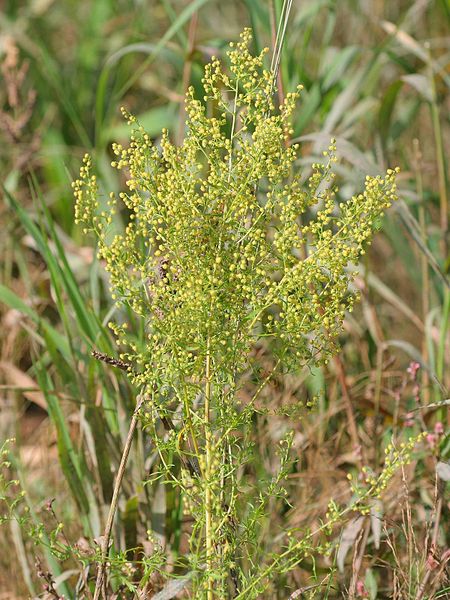
Common Name: Sweet
Wormwood
|
Artemesia annua;
Sweet Wormwood, Sweet Annie, Qing Huo, annual
wormwood
|
|
Family
|
Asteraceae
|
|
Part Used
|
Aerial parts-collected
in summer before blooming
|
|
Active constituents
|
Sesquiterpene lactones,
like artemisinin; volatile oil, flavonoids,
Vitamin A, essential oils
|
|
Actions
|
Antimalarial, antipyretic, possibly
antineoplastic
Chinese actions: 1.
Clear Heat from Yin Deficiency, 2. Check
malarial disorders and relieve Heat, 3. Clear
Summer Heat, 4. Cool Blood and stop Bleeding
|
|
Indications
|
Certain cancers,
Malaria; some blood and gastrointestinal
parasites, Lyme disease, oral and genital
papillomas, nausea with intense fever or
alternative fever and chills; Used for summer
heat with low fever, headache, dizziness, and
stifling sensation in the chest; fevers that are
unremitting or occur at night. Used for malaria
to relieve the alternating fever and chills.
|
|
Cautions
|
Caution for a postpartum
mare with Blood deficiency, cold due to Spleen
Yang deficiency; it should not be used with
Rehmannia Sheng Di Huang or Angelica Dang Gui
|
|
Contraindications
|
None known
|
|
Herb Drug Interactions
|
Potential with CYP3A4
and CYP2C19 induction but no drug interactions
have been reported
|
|
Dosage (use animal doses
where available, otherwise human doses can be
included here but specify)
|
Human-whole
herb 20-40 gram daily, in decoction; dried herb:
1-10 gram TID; Artemisinin: 400-500 mg TID;
Infusion 5-15 gram per cup of water, one cup TID;
Tincture: 1:2 or 1:3: 1-5 ml TID
Small Animal:
dried herb: 25-500 mg/kg, divided daily;
artemisinin: 2-4 mg/kg daily, divided dose;
Infusion: 5-15 g per cup of water, ¼-1/2 cup per
10 kg divided daily; tincture: 1:2-1:3: 0.5-2.5
ml per 10 kg divided daily
Horses and Cattle:
20-45 g;
llamas, Alpacas, Goats, sheep, and Pigs:
6-12 g;
Dogs:2-5
g; Cats and
Rabbits: 0.5-1
g; Birds:
0.1-1 g.
|
Notes Energetic:
bitter, pungent and cold, enters the Kidney, Liver and
GB
Preparation: For malaria, the best result is from an
extract or alcohol extract preparation.
|