|
| Veterinary Botanical
Medicine Association |
| Dedicated to Developing
Responsible Herbal Practice |
| |
| MEMBER WEBSITE |
| |
|
Jasmine C. Lyon,
Executive Director |
|
QUESTIONS?
email
office@vbma.org |
| |
| Established in 2002 by
Susan Wynn, DVM, RH(AHG) |
|
|
|
| |
|
|
| |
|
VBMA Herbal Wiki |
|
|
|
|
|
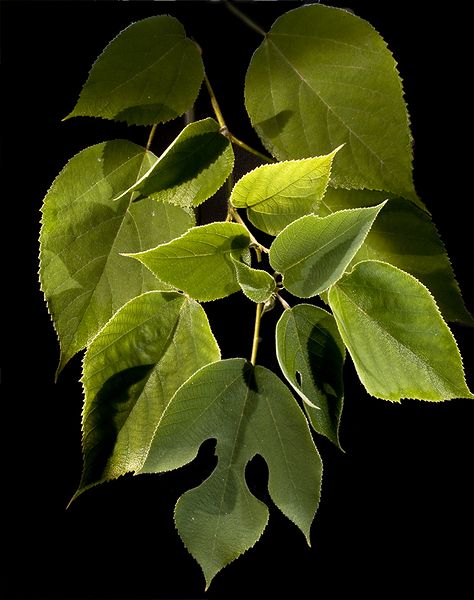
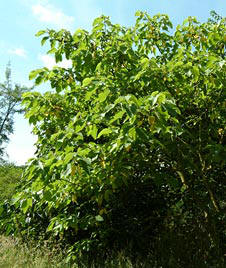
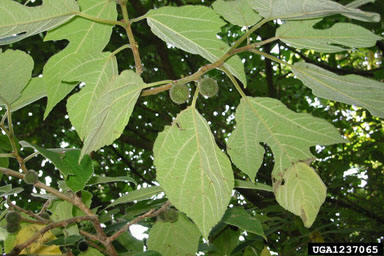
Common Name: Wauke
|
Broussonetia
papyrifera L.;
paper mulberry, Chu Shi Zi
|
|
Family
|
Moraceae- Fig family
|
|
Part Used
|
Fruit, leaves, bark,
cortex, sap, stem; In China, fruit is used
primarily as a medicine; But in Hawaii, the
plant does not fruit!!!
|
|
Active constituents
|
Benzofurans,
biphenylpropanoids, coumarins, flavonoids
|
|
Actions
Cool the Blood
|
Antidiarrhoeal, anti-swelling, astringent;
diaphoretic; diuretic; galactoagogue;
hemostatic; insecticidal; lactogogue, laxative;
ophthalmic; stimulant; stomachic; tonic
vulnerary;
TCM indications:
Plant:1) clears heat and cools the blood; 2)
drains dampness’ 3) clears damp heat in the
middle and lower burner; 4) stops diarrhea; 5)
nourishes the liver and Kidney; Fruit: 1)
strengthens joints; 2) promotes absorption; 3)
drains damp; 4) nourishing to the eyes
|
|
Indications
|
Blood deficiency, vertigo, skin eruptions:
neurodermatitis, tinea infection, eczema;
diarrhea, abdominal pain and distention,
dysentery, enteritis, laxative, weak vision,
removes pus, weakness of joints and muscles;
thrush; impotence; increases milk production,
ascites, edema;
Cloth can be made from
it; leaves can be used as paper; juice can be
used as glue
|
|
Cautions
|
None found
|
|
Contraindications
|
Prolonged use is
reported to weaken the bones
|
|
Herb Drug Interactions
|
None found
|
|
Dosage (use animal doses
where available, otherwise human doses can be
included here but specify)
|
Humans: 9-15 grams
|
|
| |
 |
|
Notes: Polynesian
introduction: minimal pest factor in Hawaii but
aggressive in other countries; rich heritage plant in
Polynesian societies
Properties: Fruit:
sweet and cold; Leaves: sweet and cool; root
cortex: sweet and neutral
Meridians: Spleen,
Liver, Kidneys
Kapa production is the
cloth made from Wauke; it had been a lost art in Hawaii
but was revived by Pua Van-Dorpe. The Hawaii kapa is
reputed to have the softest texture which is important
as it was the main source of material to make
loincloths.
|
| |
| |
| |
| |
|
|