|
|
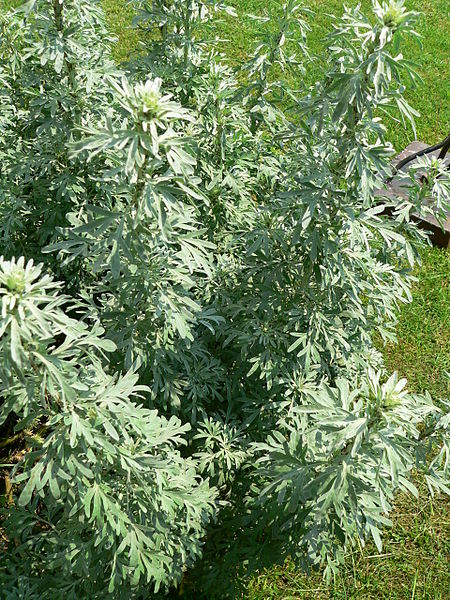
Common Name-Wormwood
|
Artemesia
absinthium L.;
Wormwood
|
|
Family
|
Compositae
|
|
Part Used
|
Aerial parts
|
|
Active constituents
|
Sesquiterpene lactones-Absinthin
and other essential oils as pinene, cineol
borneol phenol cuminic aldehyde, artemisia
ketone. Thujone is contained in one of the
essential oils (very high doses of Thujone is
neurotoxic.); phenolic acids; tannins, artemetin,
sterol, homoditerpene peroxides
|
|
Actions
|
Alterative; cholagogue; emmonagogue; astringent;
vermifuge, anthelmintic, antiparasitic; bitter
tonic, antimicrobial, antipyretic, Antimalarial,
tonic, hepatobiliary tonic, hepatoprotective,
cholagogue, anti-inflammatory
Chinese actions: 1.
Clear Heat, regulate Shao Yang , clear Retained
Pathogen 2. Tonify and Liver Qi, Clear toxin, 3.
Tonify Liver and Spleen Qi, tonify Liver Blood,
4. Regulate Liver qi, calm Liver Yang, and Wind,
5.regulate uterus, regulate liver
|
|
Indications
|
Anorexia, dyspepsia with insufficient flow of
gastric or pancreatic enzymes and bile; worm
infestation, recurring fever, postfebrile
debility, hepatic weakness, headache with
nervous tension, convulsions, petit mal, PMS
headache and irritability, menstrual
irregularities associated with nervous tension
Traditional use-Nematode
infestation, anorexia, atonic dyspepsia,
flatulent dyspepsia, diarrhea, debility;
amenorrhea and leucorrhoea if from debility
|
|
Cautions
|
Recommended dose must
not be exceeded; avoid uses if know sensitivity
of members of the Compositae family.; the
essential oil should not be used for herbal
therapy
|
|
Contraindications
|
Not to be used during
pregnancy or lactation, hyperacidity
|
|
Herb Drug Interactions
|
None known
|
|
Dosage (use animal doses
where available, otherwise human doses can be
included here but specify)
|
Human: one teaspoon of dried herb infused in cup
of boiling water; 3-9 grams; 0.7 -3 ml of a 1:5
per day
|
Grows
on roadsides and waste ground
Notes:
Strongly aromatic, herbaceous perennial; grows on
roadsides, waste ground and costal area. Temperature:
warm-cool; Taste- bitter, aromatic; Organs- LR, GB, Sp,
Ut;
Traditional use: Dioscorides-for
pains and aches of the liver, jaundice, enlarged spleen,
overindulgence; reduced appetite, stomach ache,
abdominal distension and colic; promotes urination for
edema; promotes menstruation;
Gerard-for long
lingering malaria, especially tertian; for worms;
Culpeper said that if
mixed with ink it repels mice and rats so they will not
eat the paper written on. It the closet it protects
against moths”.
Christopher says
useful for atonic and debilitated conditions, a nerve
tonic-headache and melancholia;
BHG-specifically
for nematode infestation with Enterobius or Ascaris.
Beach wrote, “When
given in moderate doses, wormwood promotes the appetite
and digestion, quickens the circulation and imparts to
the whole system a strengthening influence. It is given
in all cases requiring the administration of tonics; in
dyspepsia and other atonic states of the intestinal
canal, in certain cases of amenorrhea, chronic
leucorrhoea, and in obstinate diarrhea, depending upon
debility of the membranes of the intestines. It is often
administered in intermittent fevers with complete
success. It is likewise given as and anthelmintic.
Indications: loss of appetite in atonic dyspepsia,
amenorrhea; cornice leucorrhoea and obstinate diarrhea;
intermittent fever; jaundice; intestinal worms.
Keynote: when pulse is hard in the liver position-middle
on the left hand (Liver/GB position)
Preparation: Give the remedy in limited doses. According
to Sir John Hill, larger doses will cause “wretched
bitterness. The tops of the plant are to be used fresh
gathered, a very slight infusion of them is excellent
for all disorders of the stomach, and will prevent
sickness after meals, and create an appetite, but if it
be made strong, it will not only be disagreeable to the
taste, but will disgust the stomach.”
|